Local guide · Informational preview
Roof work in Garland, TX: repair, change material, or change pitch?
In Garland, Texas, define the kind of roof change before you choose a product or accept a quote. The city has distinct permit questions for repairs and changes. They concern repair value, roof material, and pitch. Pitch means the steepness of the roof. Use this guide to sort your project and ask for the right plan before work starts.[L1]
No verified Garland roofer is assigned to this preview. Its service request path is not connected. Use this guide to prepare your city questions. Take roof questions to a roofer you have checked. This page cannot accept a real work request or promise a visit.
Choose the question your project needs to answer
A repair asks how to fix a known defect while much of the roof stays. A material change means a different roof covering. The question is whether that covering fits the roof. A pitch change asks how the roof's shape will be altered. A single job can include more than one of these choices. Name each one rather than hiding all the work under new roof.
Start with why you want the work. Do you need to stop a leak, replace worn covering, change the look, or solve a design concern? Write one plain sentence. Then ask which parts of the job address that need. The scope is the list of work included in the job. If it grows, you will have a clear starting point for the discussion.
This page covers owner planning for Garland. It does not apply Dallas permit rules or claim that all Garland roofs share one design. The city's exact answer depends on the property and work. The examples below can help you plan. They do not approve a project.
Check the three local paths
Garland sets a permit rule by repair value. Its re-roof page gives the threshold as two thousand dollars or more. It also requires a permit for a material change. A pitch change needs detailed plans showing the proposed shape. The city asks for a signed work contract or the insurer's scope. Roofers must register and show proof of insurance.[L1]
Those published points were checked on October 5, 2026. Ask Building Inspection how they apply to your full job. A small repair price does not settle the separate material-change question. Do not split work into smaller amounts to avoid the review of a single project.
The city's Building Inspection page lists its model codes. Use it to check current local rules. No permit fee is quoted here. Ask for the current fee for the exact scope when you check the application. A cost printed on an older handout may not be the amount charged now.[L2]
Path one: keep the roof type and fix a defect
For a repair, first ask about the cause. Have the roofer show the area of work. A leak report alone does not explain which parts need to change. Have the roofer connect photos to a simple roof sketch. Ask what evidence supports the proposed fix and what remains uncertain.
The scope should name the repaired part. It should also describe the roof around it. For example, a pipe repair may need work on nearby shingles. It may also need a new seal at the opening. Ask how the repair joins sound material. The roof repair guide explains how to review that basic scope.
A closer check may change the quote. Ask for a new total and a revised scope. Have the contractor recheck the permit question if the job grows. The first quote may no longer fit the job. The city needs the actual proposed work, not an old number from an early visit.
Path two: change the covering without changing the shape
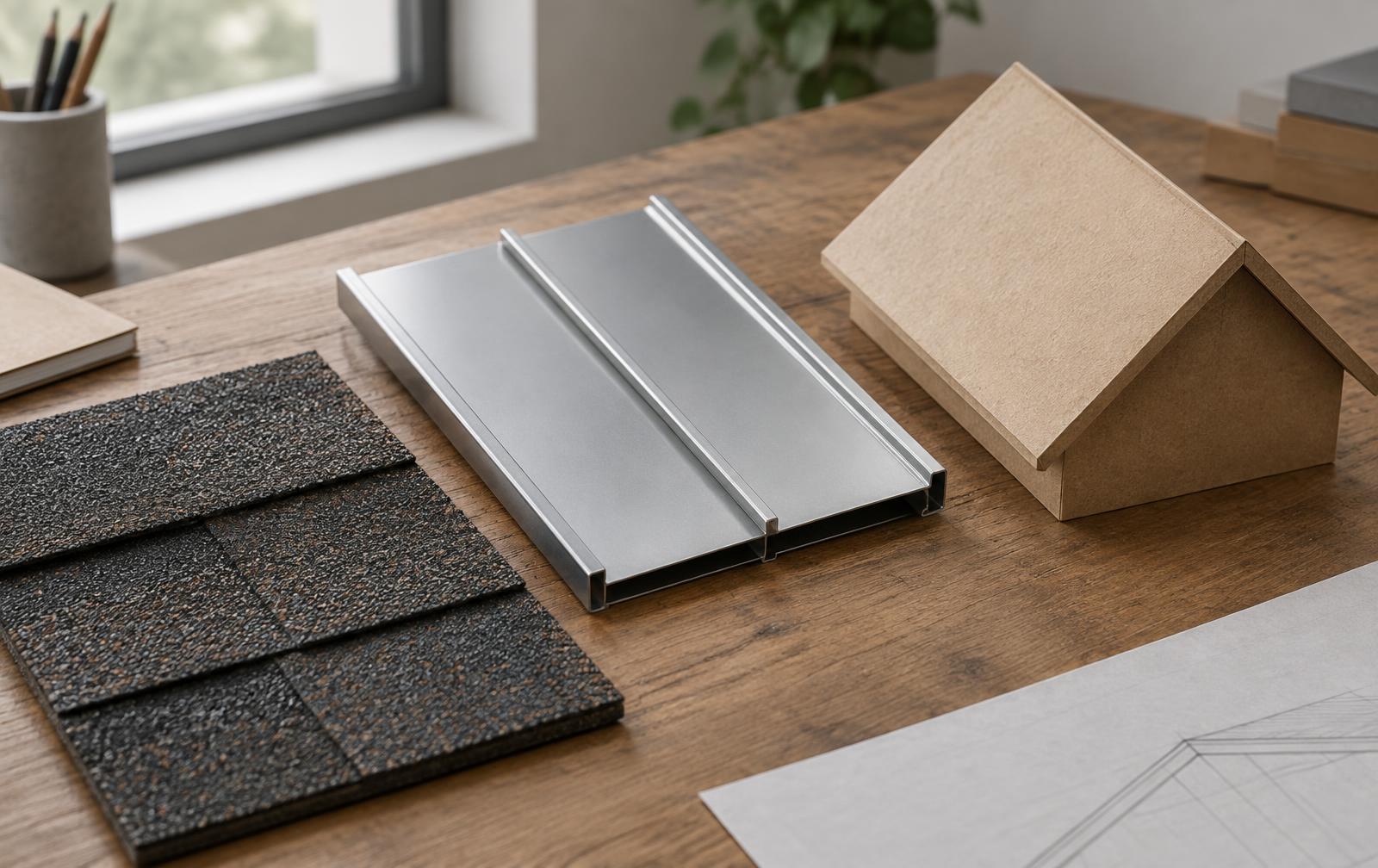
Switching from shingles to metal changes the material. The roof may still keep the same outline. Ask the roofer to name the full proposed system. A product includes more than its visible face. Its supports and fasteners must suit that roof. So must its joints and edge details.
Compare the choice by asking what must change beneath and around it. Will the old covering come off? What base is needed? How will the new roof meet a wall or chimney? Who checks the existing structure if the new system changes the loads? Let qualified people make those checks rather than deciding from a product sample.
Garland lists a minimum gauge for metal roofs. It also asks for details from the product maker. Gauge is a way to describe metal thickness. Ask the city and roofer to confirm the exact product requirement. Do not choose a roof by gauge alone. The whole system and its product guide matter.[L1]
Path three: change the roof's pitch
A pitch change is more than a new surface. It changes the roof form. Ask who will design it and what drawings the city needs. Before paying for a design, describe the problem you want it to solve. A leak does not by itself prove that a new roof shape is needed.
Ask the designer to show the existing and proposed profiles. A profile is a side view of the roof. Have them explain what changes in the frame and roof height. Ask how water flow and roof openings will change. You do not need to read every line of a plan to ask where the building will be different.
Also ask whether related work is included in the price. A roof-shape change may affect walls and vents. Other building parts may need work too. The design team should identify the actual effects. A quote may name only roof labor and materials. Do not assume it covers those other items. Have the design reviewed before work starts.
Worked example
Use this example to avoid solving the wrong problem
Imagine a homeowner wants to fix a leak over a porch. One proposal changes the roof covering. Another changes the pitch. The owner should first ask what each roofer found. Why does that method fit the defect? A bigger plan needs a clear reason. A simpler plan still needs proof that it will work.
Next, ask for the measured slope and exact product proposed. GAF sets a minimum slope for its shingles. Its guide also gives added steps at low slopes. That illustrates why product fit matters. It does not select the right roof for this porch or replace the city's review.[M1]
Then compare what each plan changes. One may keep the structure but use another roof system. The other may require design and framing work. Ask which details remain unresolved and who must answer them. Choose the plan backed by findings and review. A short sales pitch alone gives you little to judge.
Keep roof slope and roof shape clear
People may use flat to mean any roof that looks nearly level. Ask for the actual slope instead. A roof with a small rise may need a different covering. Its joints may also differ from those on a steep roof. A street photo is not enough to choose the right product.
A building can have several slopes. Ask the roofer to label them on the plan. The main roof, a porch, and a later addition may need separate notes. This avoids a blanket product choice that overlooks a small section. For low-slope concerns, use the flat roof repair guide to frame the inspection questions.
Do not climb with a level to settle a dispute. Have the roof team measure it safely and show the result. If two people disagree, ask each for the method and location they measured. The answer may reveal that they were talking about different roof sections.
Check what stays before adding another layer
Someone may propose new roofing over an old layer. Ask why that method suits the roof. Find out what is already there and how it was checked. Ask which current city rules and product instructions support the plan. A rule may allow a certain number of layers. That alone does not prove an old roof is a sound base.
Have the roofer explain how they will handle wet, damaged, or weak areas. You should receive the findings and the plan to fix them. Do not touch wet roof materials or open the roof yourself. Do not enter an unsafe attic to check hidden areas.
Ask what would make the team stop and change the method. That answer belongs in the plan before work starts. The old layers may not support that method. The scope may need to change and go back to the city. The roof replacement guide explains questions about removal and hidden work.
Request the right documents for the path you chose
For a repair, ask for a marked work area, findings, and a clear total. For a material change, add the exact product and system details. For a pitch change, ask for the drawings and the person responsible for design. Your job may use more than one path. Keep the needed records for each one.
Ask the contractor which documents will go to the city and which you will receive. Keep the scope wording clear across your records. The quote, plan, and permit form should describe the same work. If the documents use different names for the job, ask why. A mismatch can hide what the city actually approved.
Check the roofer's registration with the city. Ask the listed insurer or agent to confirm the stated coverage. Registration is one check. It does not prove work quality or mean every loss is insured. Ask for references from jobs like yours. Check them directly. No contractor is endorsed by this page.
Put inspections and changes in the work plan
Garland's published inspection guide includes a re-roof final inspection. Its general inspection page explains how requests are made. Ask which checks the city needs for your scope. Describe the repair or change in full. A list of inspection names is not a full schedule for every job.[L2][L3]
Have the contractor name the person who requests each check and shares the result. Ask what work must stay visible and how the team handles a correction. If the method changes during the job, confirm whether the city needs revised plans. Do not treat a date on the calendar as proof that an inspection passed.
For a design change, keep the designer involved at the points they specify. A crew may find something not shown on the drawing. Ask for the design team's written response. An owner should not have to choose a structural fix. One unclear photo in a text is not a design.
Make a business-building choice by roof section
For a Garland business property, name its use to Building Inspection. Give the full scope of work. Ask which commercial review applies. A home roof example has limits. It does not settle the rules for a shop or warehouse.
Have the roof team map the areas above occupied spaces and equipment. A repair on one section may differ from a material change on another. Ask who coordinates roof work with each affected trade. The commercial roof repair page covers a scope that a building owner can review.
Keep access and operating needs beside the roof plan. Name doors that must remain usable, delivery times, and any planned closures. Ask the contractor how work will be staged safely. Resolve these project questions with the team. They do not describe the city's buildings or promise local service.
Common questions
- Does a low repair price settle the permit question?
- No. Tell the city whether the work changes the material or shape, as well as its value. Different triggers can apply to one project. Get the answer for the complete scope before the contractor begins.
- Can I change to metal without changing pitch?
- That may be a proposed design option, but it needs review. Ask for the named system and measured slope. Get the city documents needed for that plan. Metal is a broad product family, not a single method that fits every roof.
- Should I ask for a new pitch to stop every leak?
- Start with the cause. Ask the roofer or designer why the shape must change. What other choices would work? A redesign should solve a stated problem, with drawings and review to support it.
Next step
Read official requirements and prepare the scope questions. This is not a roofing lead form or booking.
Check the city roof guidance(opens official site in a new tab)Sources
- [L1] Garland re-roofing guidanceLimit: Published city guidance. Fees omitted because official subdomains conflict. Layer-count text not treated as a universal safe overlay rule.
- [L2] Garland Building InspectionLimit: Current page still lists 2015 model codes. No statement that a statewide electrical code or every legal condition is fixed by that web list.
- [L3] Garland inspection request guideLimit: Inspection naming only; does not establish which checks apply to every roof project.
- [M1] GAF minimum slope for shingles (dated 2025-02-07)Limit: Manufacturer guidance, not universal instructions for all brands or an installation tutorial.
Sources checked October 5, 2026. Confirm current rules with the city before work starts.