Homeowners · For homeowners
Roof Replacement in Dallas: How to Plan a Full Re-Roof
Quick answer
A full roof replacement takes off the old roof and puts on a new one. It makes sense when damage is spread across the roof, not just in one spot. To plan well, learn the layers of a roof, compare bids line by line, ask who gets the permit, and get every promise in writing.
What this page covers
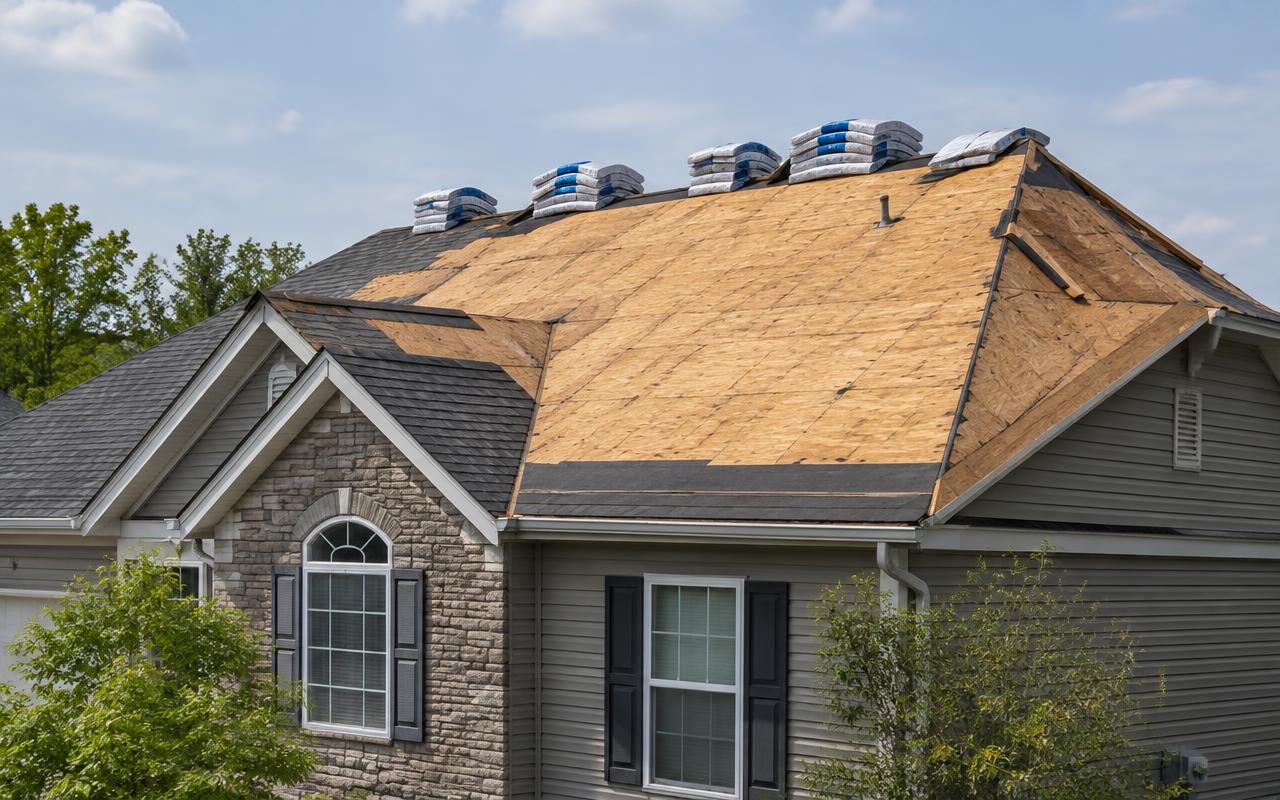
This page helps homeowners plan a full new roof on a sloped home. It explains the layers, the steps, and how to compare bids.
If you are not sure yet whether you need a new roof, start with our repair or replace guide. If you want to know what changes the price, see our roof cost factors guide. If you live in Dallas and want permit rules, see our Dallas permits guide.
Signs a new roof may be the right choice
GAF, a big shingle maker, says the key question is whether the damage is in one place or spread out. A new roof makes more sense when problems show up all over.
- Shingles are cracked, curled, or bare on many sides of the roof.
- Shingles break when someone bends them.
- You have had leaks in several places.
- You have paid for many repairs in a few years.
- The wood under the roof feels soft in more than one spot.
If only one area is damaged, ask for a repair price too. It is fine to compare both.
The layers of a new roof
A new roof is more than new shingles. Each layer matters for how long the roof lasts in Texas heat.
- Tear-off: the crew removes the old shingles and old layers.
- Deck: the wood boards are checked, and bad boards are replaced.
- Underlayment: a backup sheet goes over the wood.
- Ice and water barrier: a sticky sheet goes in valleys and other weak spots.
- Drip edge: a metal strip at the roof edge guides water into the gutters.
- Flashing: metal seals go where the roof meets walls and chimneys.
- Pipe boots: new collars go around plumbing pipes.
- Shingles: the top layer goes on last.
- Vents: air flow is set up at the ridge and the low edges.
Why air flow matters
Attics in Dallas get very hot in summer. Heat from below can bake shingles and make them age faster.
Good air flow lets cool air in low, near the edges, and hot air out high, near the top. Roofers call the low vents soffit vents and the top vent a ridge vent.
Many shingle makers have rules about air flow in their warranties. Ask your roofer how they will vent your attic. Ask them to show it in the bid.
Choosing shingles
Many homes use asphalt shingles. There are a few main kinds:
- Three-tab shingles are thin and flat. They are less common now.
- Architectural shingles are thicker and have a layered look.
- Impact-rated shingles are made to resist hail better. The top rating is called Class 4.
Impact-rated shingles cost more. Some insurance companies offer a discount for them. Ask your insurer if they do, and get it in writing.
Color matters too. Lighter colors reflect more sun, which can help in summer.
How the job usually goes
Every job is different, but many follow this order:
- The roofer measures the roof and gives you a written bid.
- A permit is pulled, if one is needed.
- Materials are dropped off at your home.
- The crew covers plants and the yard to catch trash.
- The old roof comes off, often one section at a time.
- Bad wood is replaced, and new layers go on.
- The crew cleans up and uses a magnet to pick up nails.
- The roofer does a final check and gives you photos and papers.
Many home roofs take one to three days. Weather and wood repairs can add time.
How to compare bids
Bids can look very different on paper. The trick is to compare the same items.
Make a simple chart and fill in each bid:
- Shingle brand, line, and impact rating
- Type of underlayment
- How many wood boards are included
- Price for each extra wood board
- New or reused flashing and drip edge
- New pipe boots
- Vent plan
- Permit, trash removal, and cleanup
- Maker's warranty and roofer's work warranty
If one bid leaves out an item, it has not priced it. That does not mean the item is free.
Two kinds of warranties
There are often two promises on a new roof.
The maker's warranty covers the shingles themselves. It may need the roofer to be approved by the maker. It may also need certain parts to be used.
The roofer's work warranty covers how the roof was put on. It comes from the roofing company, not the maker.
Ask for both in writing. Read what each one covers and for how long. Keep the papers in a safe place.
Permits and special rules in Dallas
The City of Dallas permit guide says home roofing work over $500 in labor and materials needs a permit. A full new roof is well over that amount.
If your home is a city landmark or sits in a landmark district, you need a Certificate of Appropriateness before work starts. The city says this is needed even for routine work like same-color shingles.
If you live outside Dallas city limits, follow your own city's rules. Ask your roofer who gets the permit and put it in the contract.
Getting ready for work day
- Move cars out of the driveway.
- Take wall hangings down on the top floor, since hammering can shake them.
- Keep kids and pets inside or away from the work area.
- Cover things in the attic, since dust can fall.
- Let your neighbors know there will be noise.
- Ask where the trash bin will go.
What drives the cost
We do not post prices, because every roof is different. These are the main things that move the price:
- Roof size and how steep it is
- How many old layers must come off
- How much wood needs to be replaced
- The shingle line you choose
- How many pipes, valleys, and skylights the roof has
- Vent changes
- Permit and trash fees
Our roof cost factors guide covers this in more detail.
Insurance and new roofs
If storm damage caused the need for a new roof, insurance may help. Your policy decides what is covered.
The Texas Department of Insurance says a roofer working on your home cannot act as your public adjuster. They also cannot pay or skip your deductible. Be careful of anyone who offers that.
Questions to ask a roofer
- How many wood boards are in the price? What does each extra cost?
- Will flashing, drip edge, and pipe boots be new?
- How will you vent the attic?
- Who gets the permit?
- Which warranty comes from the maker, and which from you?
- How will you protect my yard and clean up nails?
- Will you give me photos of the wood and layers before the shingles go on?
Paying for a new roof
A new roof is a big expense. Many people plan for it the same way they plan for a car.
Ask about payment terms before you sign. Be careful with any company that asks for most of the money before work starts. A deposit for materials can be normal, but large upfront payments are a risk.
Get every payment step written in the contract. For example, the contract may list a deposit, a payment when work starts, and a final payment after the last check. Do not make the final payment until the job is done and you have your papers.
After the new roof is on
When the job is done, walk around the house with the roofer. Look at the edges, gutters, and yard. Ask them to show you photos of the wood and layers before the shingles went on.
Ask for copies of the permit sign-off, if one was needed, and both warranties. Register the maker's warranty if the maker asks you to. Some warranties need to be registered within a set time.
Check your attic after the first big rain. Look for any new stains. If you see one, call the roofer right away, since a small problem is easier to fix early.
Watch out for storm chasers
After big storms, out-of-town crews often go door to door. Some do fine work. Others leave town before problems show up.
Check that a roofer has a local address you can visit. Look up their reviews on more than one site. Do not sign anything on the spot, and never sign a paper that gives away your claim rights.
Choosing a roofer
Texas does not issue a general state roofing license, so your own checks matter more. Ask for proof of insurance, a local address you can visit, and a written contract that lists every item and payment.
Read reviews on more than one site, and look for reviews that describe real jobs. Ask whether the roofer is approved by the shingle maker you picked, since that can affect the maker's warranty.
Get at least two or three bids that cover the same items. Then compare them with the chart from the section above.
What you see and what it usually means
| What you see | What it usually means |
|---|---|
| Damage on many sides of the roof | A new roof is worth pricing |
| Damage on one side only | Ask for a repair price too |
| Soft wood in several spots | Expect wood replacement in the job |
| Very hot attic and curled shingles | Add better air flow to the plan |
| A bid with missing line items | Ask them to price each item |
Common questions
- Can new shingles go over old ones?
- Codes sometimes allow one extra layer. A tear-off lets the roofer check and fix the wood below, which many owners prefer.
- Do I need to be home during the job?
- Not always, but it helps to be reachable. The roofer may need to ask about wood repairs or show you a problem.
- Are impact-rated shingles worth it?
- They resist hail better, but they are not hail-proof. Compare the extra cost with any insurance discount.
- How long will a new roof last?
- It depends on the shingle, the install, the air flow, and the weather. Ask the maker for its expected life and warranty terms.
- What if the roofer finds more rotted wood than expected?
- This is common on older homes. A good contract lists a price for each extra board, so you know the cost before work starts. Ask the roofer to show you photos of the bad wood before they replace it, and keep those photos with your papers.
- Will a new roof lower my cooling bill?
- It might, especially if the plan adds better attic air flow or lighter shingles. Results depend on your home, insulation, and air conditioner. Be wary of anyone who promises a set savings amount without looking at your house.
- Should I replace gutters at the same time?
- If your gutters are old, bent, or pulling away, doing them with the roof can save a second visit. If they are in good shape, they can usually stay. Ask the roofer to check them and tell you plainly.
What happens if you send a request here
This site is a preview. The request form is not connected, so nothing you type is saved or sent. No local roofing partner is confirmed yet, so we cannot promise a visit, a price, or a time. If anyone is in danger, call 911. How this site works.
Sources
- GAF — Should you repair or replace your roof?
- City of Dallas — Development Services permit guide
- City of Dallas — Landmark review process (Certificate of Appropriateness)
- Texas Department of Insurance — Roofing and insurance: know the law
Sources checked October 5, 2026. Confirm current rules before acting.