Homeowners · For homeowners
Roof Repair in Dallas: Find the Real Cause Before You Pay
Quick answer
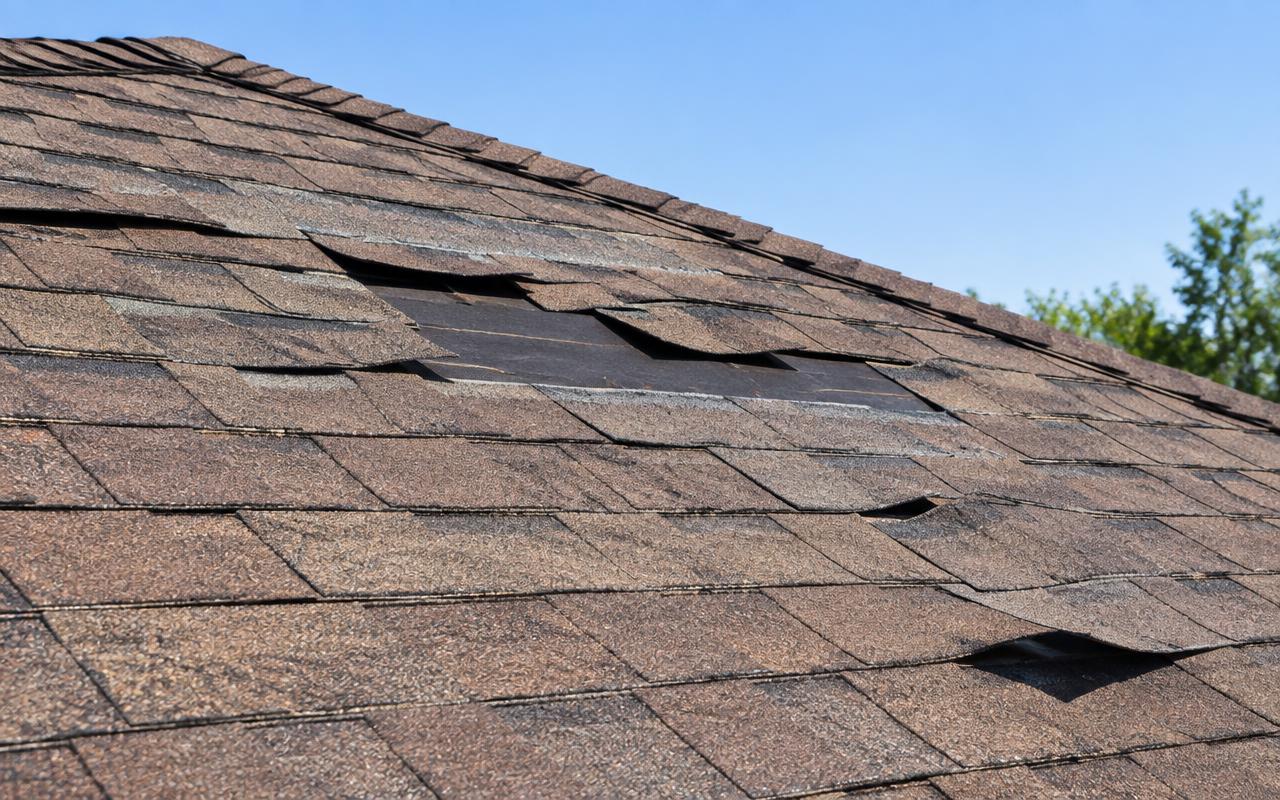
A home roof repair fixes damage in one part of the roof, like a few missing shingles or a cracked seal around a pipe. It is the right choice when the rest of the roof is still in good shape. Before you pay, make sure someone has checked how far the damage goes and what caused it.
What this page covers
This page is about damage you can see or suspect on a sloped home roof. Maybe shingles blew off in the wind, or you found pieces in the yard. Maybe you just want to know if a spot needs fixing.
If water is already dripping inside your home and you do not know where it comes from, our roof leak page is a better fit. If damage showed up right after a hail or wind storm, see our storm damage page. If your roof is flat, see our flat roof repair page.
The parts of a home roof
It helps to know the main parts before you talk to a roofer. Then their words will make sense.
Shingles are the flat pieces you see on top. Many homes use asphalt shingles. Each one has a thin mat soaked in asphalt, which is a thick black oil product, with tiny stones on top. The stones are called granules, and they shield the shingle from the sun.
Under the shingles is a thin sheet called underlayment. It is a backup layer that sheds water if a shingle fails.
Under that is the deck. The deck is made of wood boards that hold up everything else.
Flashing is thin metal that seals the joints where the roof meets a wall, a chimney, or a skylight. Pipe boots are rubber or metal collars that seal around plumbing pipes.
Look safely from the ground first
You can learn a lot without a ladder. GAF, a big shingle maker, tells homeowners to check from the ground and from inside rather than climb up. Roofs are steep, and falls are a real danger.
Walk around your home on a clear day and look for these signs:
- Shingles that are missing, bent up, or creased
- Shingle pieces lying in the grass or the driveway
- Piles of tiny stones near the bottom of your downspouts
- Metal at walls or the chimney that looks bent, loose, or rusty
- Spots where the roof line looks wavy or sunk in
Use your phone to zoom in. Take photos so you can show them to a roofer later.
Check the attic if you can do it safely
You do not need to walk into the attic. If the attic door opens to a floored spot with good light, you can stand at the opening and shine a flashlight up at the wood. If there is no floor, it is hot, or you see wires near wet spots, stay out and let a trained person look.
- Look for dark stains or wet spots on the wood.
- Look for daylight coming through.
- Look for insulation that seems darker or flattened, but do not touch damp spots.
- Sniff for a musty smell.
A stain does not prove the wood is bad. A dry, old stain may be from a leak that was fixed long ago. A wet or growing stain is more urgent. Only a close check can tell if wood has lost strength.
Is the damage in one spot or everywhere?
This is the most important question for any repair. GAF's guide also centers the choice on how widespread the damage is.
A repair is a good fit when the damage stays in one small area. For example, a few shingles blew off one side of the roof. Or one pipe boot cracked in the sun.
A repair is a poor fit when problems show up all over the roof. If many shingles crack when they are bent, they are brittle. If leaks keep coming back in new places, the roof may be near the end of its life.
A good roofer looks at the whole roof before quoting a repair. If someone quotes a price without looking, ask them to check more.
Common home roof repairs
Most home roof repairs fall into a few groups:
- Replacing missing or torn shingles
- Swapping a cracked pipe boot for a new one
- Resealing or replacing flashing at a wall or chimney
- Fixing a valley, which is the low line where two roof slopes meet
- Replacing a small area of rotted deck boards
- Fixing nail holes left from an old dish or antenna
Each of these is a normal, common job. None of them means you need a new roof by itself.
What a good repair visit looks like
A careful roofer follows clear steps. They should not just smear sealant on top and leave.
- They ask what you have seen and look at your photos.
- They check the attic or inside, if they can.
- They look at the damaged area and the roof just above it.
- They check nearby flashing, pipe boots, and valleys.
- They see if matching shingles can be found.
- They give you a written list of the work and the price.
- When they finish, they show you photos of the work.
Good roofers explain why the damage happened. If they cannot say why, the same problem may come back.
Matching old and new shingles
New shingles may not look exactly like the old ones. Shingles fade in the sun, and makers change their colors over the years.
Ask the roofer to bring a sample or show you a photo of the shingle they plan to use. Ask how close the match will be. On the back of the house, a small color change may not matter. On the front, it may matter more to you.
If there is no good match, ask what your choices are. Sometimes a roofer can take shingles from a hidden spot and use them on the front.
When rotted wood shows up
Sometimes a roofer lifts shingles and finds soft, dark wood below. That means water has been getting in for a while.
If a roofer finds wood that is soft or weak, that part is usually cut out and replaced. A patch over weak wood may not hold. Stained wood that is still dry and firm may not need to be replaced. Ask the roofer how they tested it.
Ask about this before work starts. A good bid will say what happens if they find bad wood, and how much each extra board costs. That way, there are no surprises.
Permits in Dallas
The City of Dallas permit guide says home roofing work over $500 in labor and materials needs a permit. Work on rafters or joists needs a different permit too.
Many repairs cost more than that, so a permit may be needed. Ask your roofer who will get the permit. Get that in writing.
If your home is in a historic district or is a landmark, extra rules apply. If you live outside Dallas city limits, your own city's rules apply instead.
What drives the cost
We do not post prices, because real prices depend on your roof. These things make a repair cost more or less:
- How steep and how high the roof is
- How hard it is to find matching shingles
- Whether rotted wood must be replaced
- Whether flashing has to come off and go back on
- How many spots need work
- Whether a permit is needed
Ask for a written list of what is included. Compare bids by that list, not just the total.
Questions to ask a roofer
Take this list with you when you talk to a roofer:
- What caused the damage, and how do you know?
- Exactly what will you remove and replace?
- Will the new shingles match? Can I see a sample?
- What happens if you find rotted wood?
- Who gets the permit?
- Will you send me photos when the job is done?
- Is there any promise about your work, in writing?
Honest roofers are happy to answer. If someone rushes you or will not answer, that is a warning sign.
Signs it may be time to think bigger
Sometimes a repair is not the best use of your money. Here are signs to ask about a full new roof instead:
- Damage is spread across many parts of the roof.
- Shingles crack or break when they are bent.
- You have had several repairs in the past few years.
- Bare spots show where the tiny stones have washed off.
- The deck feels soft in many places.
Our page on repair or replace walks through this choice in more detail. It is fine to ask a roofer to price both options so you can compare.
Small problems that grow if you wait
A missing shingle may not leak today. But the layer below it is now open to sun and rain, and it was never meant to be the top layer for long.
Over a few months, the sun can dry out that backup layer. Then water reaches the wood. Wood that stays wet can start to rot over time. How fast depends on how wet it stays.
That is why it is smart to fix small damage soon. A quick fix on one spot is often simple. Waiting can turn it into a bigger job with new wood, more labor, and inside repairs too.
Repairs on tile, slate, and metal roofs
Not every home has asphalt shingles. Some homes have clay tile, concrete tile, slate, or metal panels. Each one needs a roofer who knows that material well.
Tile and slate can crack when people walk on them the wrong way. Ask the roofer how they will move across the roof without breaking more pieces. For metal roofs, ask how they will match the panel shape and color.
Gutters and the roof edge
Sometimes what looks like a roof problem is really an edge problem. If gutters clog, water can back up under the bottom row of shingles and soak the wood along the edge of the roof.
Look for peeling paint, dark streaks, or soft wood on the boards behind your gutters. Clean gutters a few times a year, and more often if big trees hang over your home.
Repair clues from your yard and attic
| What you see | What it usually means |
|---|---|
| A few shingles missing on one side | Often a simple repair |
| Shingles break when lifted | A repair may cause more damage; ask about a new roof |
| Leaks that keep coming back in new places | The whole roof may be wearing out |
| Soft or stained wood in the attic | Have the wood checked for strength |
| A cracked collar around a pipe | Swap the pipe boot |
Common questions
- Can a roof be repaired instead of replaced?
- Yes, when the damage is in one area and the rest of the roof is still flexible and sound. A roofer should check the whole roof first.
- How long does a small repair take?
- Many small repairs take a few hours. Bigger jobs, or ones that need new wood, can take longer.
- Will a repair hurt my roof warranty?
- It might, if the maker's terms require certain work. Find your papers and check before work starts.
- Should I go on the roof to look?
- No. Look from the ground, and from the attic door only if it is safe. Roofs are steep and slick, and falls cause serious injuries.
- Do I need to replace the whole side of the roof?
- Not usually. Most repairs replace only the damaged shingles and a few around them so the new ones lock in. A full side may make sense if many shingles on that side are worn or the color match is poor.
What happens if you send a request here
This site is a preview. The request form is not connected, so nothing you type is saved or sent. No local roofing partner is confirmed yet, so we cannot promise a visit, a price, or a time. If anyone is in danger, call 911. How this site works.
Sources
- GAF — Should you repair or replace your roof?
- City of Dallas — Development Services permit guide
- City of Dallas — Landmark review process (Certificate of Appropriateness)
Sources checked October 5, 2026. Confirm current rules before acting.