Commercial · For owners & managers
Preventive Roof Maintenance Programs for Dallas Buildings
Quick answer
A roof upkeep plan is a schedule of small checks and fixes, plus a record of each visit. It keeps drains clear, catches small problems early, and builds a history that helps with warranties and budgets. Most plans include visits about twice a year and after big storms, with photos each time.
What this page covers
This page is for owners and managers who want a regular upkeep plan for a business roof. It explains what a plan includes, how often visits happen, and how to tell if a plan is working.
If you need a one-time report, see our commercial roof inspection page. If you manage many buildings, see our page on roof programs for property managers. If you have a leak right now, see our commercial leak page.
Why small work matters
Many big roof problems start small. A clogged drain leads to standing water. A loose seal leads to a slow leak. A slow leak soaks the foam below.
Regular upkeep catches these things early. Small fixes cost less than big ones. They also cause less trouble for the people inside.
What a typical visit includes
Each visit should follow a checklist. Here is what many plans cover:
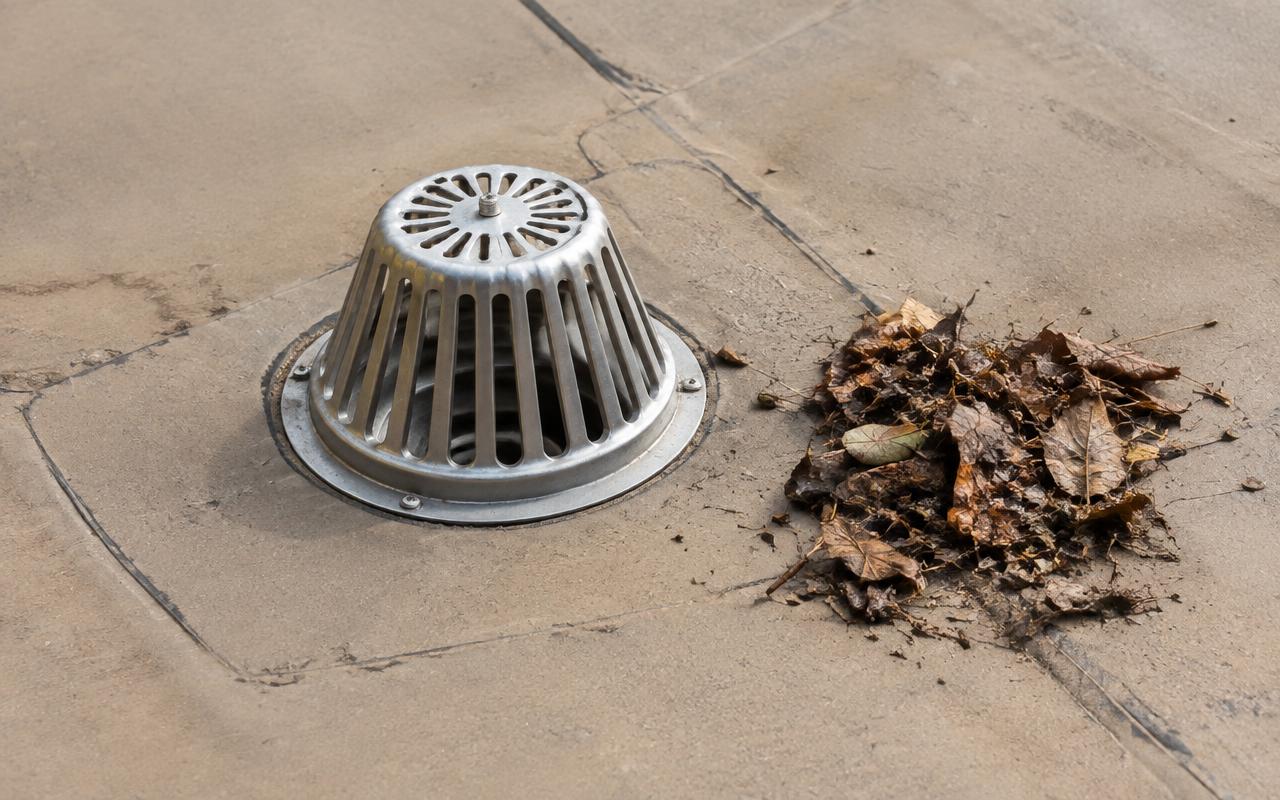
- Clear drains, scuppers, and gutters
- Remove leaves, trash, and loose items
- Check seams, which are where roof sheets join
- Check flashing at walls, curbs, and pipes
- Check pitch pans, which are small cups of sealant around odd shapes
- Patch small holes and cuts
- Look for water that sits after rain
- Check the metal caps on low walls
- Take photos and write a short report
Scuppers are openings in the low wall that let water off the roof. Curbs are the raised boxes under air units.
Why drains come first
Drains are the most important thing on a flat or low-slope roof. If they clog, water has nowhere to go.
GAF, a large roofing maker, says drains, scuppers, and slope are the main ways to move water off a roof. Standing water adds weight and wears out some roof types faster.
A good plan clears every drain at every visit. It also checks that the drain covers, called strainers, are in place. A missing strainer lets trash slide into the pipe.
How often visits happen
Many plans include two visits a year, often in spring and fall. They also add a visit after big storms.
The National Weather Service says spring is the peak severe storm season in North Texas. A spring visit can catch storm damage early. A fall visit clears leaves before winter rain.
Roofs under trees may need more visits. So may roofs with lots of equipment or foot traffic.
Records are part of the plan
A visit without a record is only half the job. Each visit should leave you with:
- The date of the visit
- Photos of the roof and any problems
- A list of what was fixed
- A list of what needs a quote
- Notes on anything to watch
Keep these in one folder for each roof. If a warranty or insurance question comes up, you will have proof that the roof was cared for.
Warranties and upkeep
Some roof warranties require regular upkeep. They may need proof of visits.
Read your warranty to see what it asks for. Share it with whoever does the upkeep. Ask them to match their visits and reports to what the warranty needs.
Other people on your roof
Air conditioning workers are often on the roof more than roofers are. Tools get dropped. Screws fall out of panels. New pipes get added without proper seals.
- Post a log by the hatch where every visitor writes their name and reason.
- Put down walk pads, which are thick mats, on paths to equipment.
- Ask for a roof check after any air unit is swapped.
- Require a heads-up call before anyone adds a pipe, vent, or bracket.
These simple steps prevent many surprise leaks.
Included fixes or quoted fixes
Plans handle repairs in different ways. Some include small fixes in the visit. Others quote every repair separately.
Ask which kind of plan you are getting. If small fixes are included, ask what counts as small. Get it in writing so there is no confusion later.
How to tell if a plan is working
A plan is working when each visit finds only small items. Leaks become rare. The roof looks about the same from one year to the next.
A plan may not be working when the same problems come back again and again. That means the cause has not been fixed.
If the number of repairs grows each year, the roof may be wearing out. That is a sign to start budgeting for a coating or a new roof.
One plan for many buildings
If you manage more than one roof, one plan can cover them all. Ask for the same checklist and report at each site.
A simple list with each roof's type, age, warranty, and last visit helps you see which roofs need the most attention.
Safety on the roof
Only trained people with fall safety gear should do roof upkeep. Skylights and roof edges are serious fall risks.
Do not send staff up during storms or when the roof is wet. If water is coming in, keep people away from wet areas and anything electrical.
What drives the cost
We do not post prices. These things change the cost of an upkeep plan:
- How many roofs and how big they are
- How often visits happen
- How easy the roof is to reach
- Whether small fixes are included
- How detailed the reports are
Questions to ask before you sign
- What is on the checklist for each visit?
- Are small fixes included? What counts as small?
- Will we get photos and a report every time?
- Will you match visits to our warranty's rules?
- Will you come out after big storms?
- Can every building get the same report format?
What to include in your first visit
The first visit is special. It sets the baseline, which is a record of how the roof looks at the start.
Ask for a full inspection with a roof map, photos, and a list of current problems. The roofer should note the roof type, age, and any warranty facts. They should also find every drain, scupper, curb, and pipe and mark them on the map.
This baseline makes every later visit faster and more useful. Changes are easy to spot when you know where you started.
Seasonal tasks in North Texas
Different times of year bring different needs. The National Weather Service describes hot summers and wetter spring and fall months in North Texas.
In spring, the focus is often on storm damage and making sure drains are ready for heavy rain. In summer, heat can dry out sealants and cause some roof sheets to wear faster, so seals are checked closely. In fall, leaves can clog drains, so clearing them is a top task.
After any big storm, an extra visit can catch damage before it turns into a leak.
Coatings and upkeep
Some roofs have a liquid coating on top. Coatings need their own care. Over time, they can wear thin, get dirty, or peel in spots.
GAF's coating guide stresses that coatings need a clean, dry, sound surface. During upkeep visits, ask the roofer to check for thin or peeling spots and to note when a fresh coat may be needed.
Do not let anyone add a coating without testing for wet areas below first.
Building a simple roof file
Every roof should have one file. It can be a folder on a computer or a binder in the office.
- The baseline report and roof map
- Warranty papers and rules
- Every visit report with photos
- Every repair, with date and cost
- Leak log from inside the building
When it is time for a big decision, this file helps you and any roofer understand the full history.
Talking about upkeep with tenants
If you lease space, tenants may see roofers on site and wonder why. A short note helps them understand that the visit is regular care, not an emergency.
Ask tenants to report leaks or stains quickly. Their reports help the roofer focus on the right spots.
Starting a plan on an older roof
If your roof is already old, a plan can still help. It can slow down wear, catch leaks early, and give you time to plan a new roof.
Be honest with yourself about what upkeep can do. It cannot make a worn-out roof new again. But it can help you avoid a sudden failure while you save and plan.
Ask the roofer to tell you plainly if they think upkeep is no longer worth it for your roof. A good roofer will say so.
Rooftop safety gear and access
Regular visits are a good time to check safety items on the roof. Look at the hatch, ladders, rails, and skylight guards.
If anything is loose or missing, fix it. Safe access protects roofers, air conditioning workers, and anyone else who goes up. It also makes every visit faster.
What visits find and what it usually means
| What visits find | What it usually means |
|---|---|
| Only small items each time | The plan is working |
| The same problem keeps coming back | Fix the cause, not just the symptom |
| More repairs every year | Start planning for a bigger fix |
| Clogged drains at most visits | Visit more often or add guards |
| New holes near air units | Add walk pads and a sign-in sheet |
Common questions
- Is a plan worth it for a small roof?
- Small roofs still have drains and seals that fail. A plan can be simple, but regular checks still help.
- Can staff clear the drains themselves?
- Only if they are trained and have safe roof access and fall safety gear. Otherwise, leave it to a roofer.
- Will a plan stop all leaks?
- No plan can promise that. It lowers the odds and helps you catch problems early.
- How long should we keep the reports?
- Keep them for as long as you own the building. They show the roof's history.
- Can a plan be paused or changed?
- Many plans can be adjusted. You might add visits for a roof under trees or cut back on a new roof with few problems. Ask how changes work before you sign, and review the plan once a year using your visit reports and leak log.
- Who should be our contact for the plan?
- Pick one person who knows the building and can open the roof hatch. That person receives the reports, tracks the fixes, and talks with tenants or staff when visits are coming up.
- What is a walk pad?
- A walk pad is a thick mat laid on the roof along paths to equipment. It spreads out the weight of people walking and protects the roof sheet from tools and boots. Pads are one of the cheapest ways to prevent punctures.
- How soon after a storm should a visit happen?
- Many owners ask for a check within a few days after a big storm, once it is safe to go up. The goal is to find damage before the next rain, while the storm date is still fresh for your records.
What happens if you send a request here
This site is a preview. The request form is not connected, so nothing you type is saved or sent. No local roofing partner is confirmed yet, so we cannot promise a visit, a price, or a time. If anyone is in danger, call 911. How this site works.
Sources
Sources checked October 5, 2026. Confirm current rules before acting.