Homeowners · For homeowners
Storm Damage Roof Repair in Dallas: Steps After Wind and Hail
Quick answer
After a storm, start with safety, photos, and a ground-level look. Then have someone check the whole roof, not just the spot you noticed. Storm repair is about matching the fix to what the storm actually did. Some homes need a few shingles. Some need flashing, wood, or a larger section redone. A storm alone does not prove your roof was hurt.
What this page covers
This page is for homeowners after the storm has passed. The wind has calmed, and you want to know what to fix and in what order.
If water is coming in right now and the roof is open, start with our emergency roof tarping page. If you mainly want to know whether hail left marks, our hail damage inspection page goes deeper on that. This page connects those steps into a repair plan.
Storms in the Dallas area
The National Weather Service office in Fort Worth notes that spring is the peak time for severe storms in North Texas, with another wet stretch in the fall. Hail, strong wind, and heavy rain can all happen in the same storm.
Severe weather hits somewhere in the Metroplex in most years. That does not mean every home, or every street, gets hit each year. One neighborhood can get hail while the next one gets only rain.
The first day after the storm
Walk around your home in daylight. Stay on the ground. Look for fallen limbs, shingle pieces, bent gutters, and dents on metal vents or the air conditioner outside.
Look inside, too. Check ceilings under each part of the roof. Look for new stains or drips. If you see water near lights or outlets, stay out of that room and get qualified electrical help.
Take photos and write down the date. Note anything you threw away, like broken limbs, and photograph it before you move it.
Three kinds of storm damage
Most storm roof damage falls into three groups. Each one needs a different fix.
Wind damage happens when gusts lift shingles, break the seal strips that glue them down, or tear pieces off. Our wind uplift page explains why edges and ridges often go first.
Hail damage happens when ice hits the roof. It can knock loose the tiny stones on shingles, crack them, or dent metal. Our hail bruising page explains the marks.
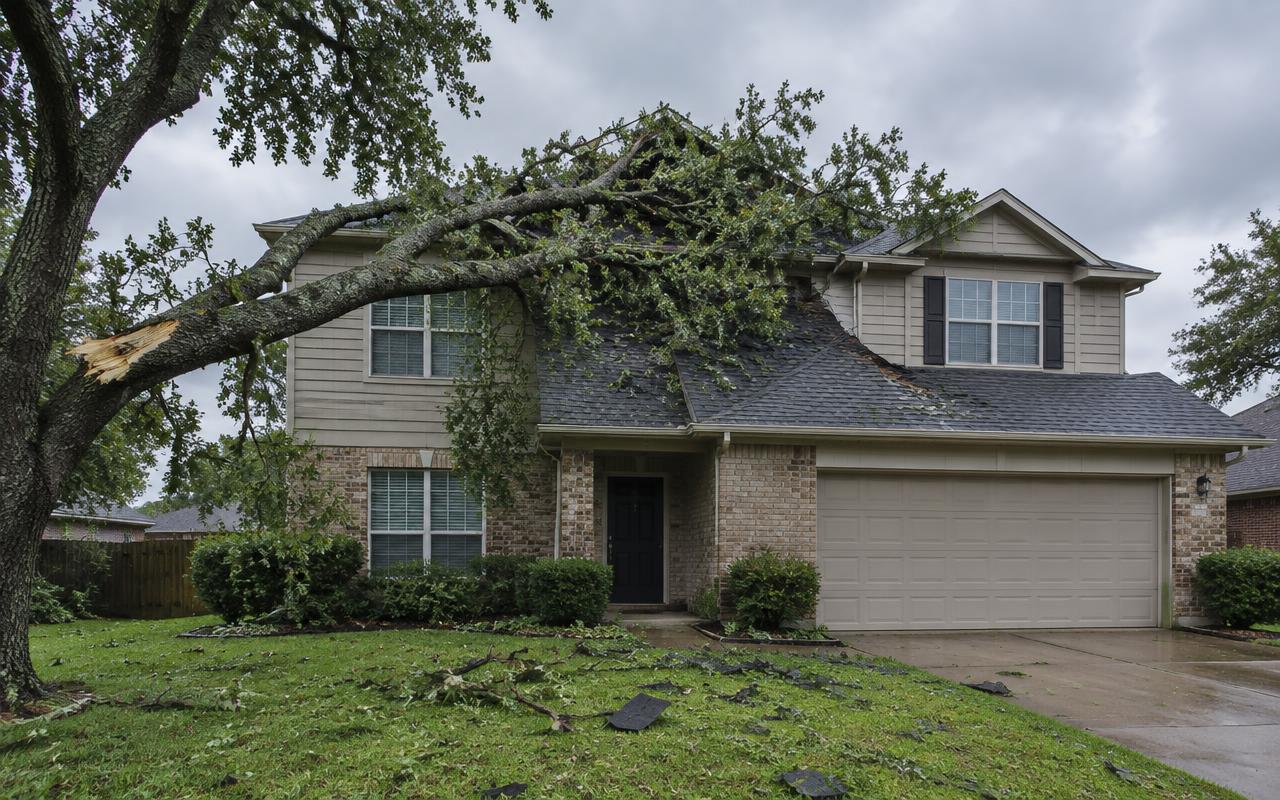
Impact damage happens when a limb or other object hits the roof. It can break shingles, the wood deck under them, or even a rafter.
Why the whole roof needs a look
Storm damage is not always where you first spot it. Wind often hits one side of a house hardest. Hail may leave marks on the side that faced the storm and few on the other side.
A careful roofer checks every slope, the ridge, and the edges. They look at soft metal parts, like vents and gutters, because dents there can help show the size and direction of the hail.
GAF, a major shingle maker, says the choice between repair and replacement depends on how widespread the damage is. A few spots in one place point toward repair. Damage spread across many slopes may point toward a bigger job.
What a good storm repair includes
- Photos of each damaged area before work starts
- A written list of what will be fixed and why
- Matching shingles as closely as possible, or a note if an exact match is not available
- New seal strips or hand-sealing where wind lifted shingles
- Checking and resealing flashing at walls, chimneys, and pipes
- Replacing deck boards only where testing shows they are weak, not just stained
- Photos when the work is done
Ask the roofer to explain any part you do not understand. A good one will be glad to.
When matching shingles is hard
Shingle colors change over the years, and sun fades a roof. New shingles may not match an older roof exactly.
Ask the roofer to show you a sample next to your roof. Ask if the same product line is still made. If the match is poor, talk about where the patch will show. A patch on the back side may matter less to you than one on the front.
Whether a poor match is covered by insurance depends on your policy. Ask your insurer, not the roofer, to explain what applies.
Permits for storm repair in Dallas
The City of Dallas permit guide says home roofing work over $500 in labor and materials needs a permit. Work on rafters or ceiling joists needs a separate alteration permit.
If you live in a Dallas landmark district or a listed landmark home, the city says exterior work needs a Certificate of Appropriateness before work starts. That includes like-for-like shingle work.
Other cities around Dallas have their own rules. Check with your own city before work begins.
Insurance roles in Texas
The Texas Department of Insurance says a roofer cannot act as your public adjuster or offer to cover your deductible. The roofer's job is the roof. They can give you photos and an estimate.
Your insurer decides what is covered. If you want someone to deal with the insurer for you, that person must be a licensed public adjuster. Our Texas claim guide explains each role in plain words.
Gutters, vents, and other soft metal
Gutters, downspouts, roof vents, and window screens are softer than shingles. Hail often dents them first. These dents are useful clues, but they are not proof the shingles were hurt.
A roofer may measure the dents and note which side of the house they face. That helps show the storm's direction. Then they check the shingles on those same sides up close.
Bent gutters can also cause their own problems. If water cannot drain, it can spill behind the gutter and soak the edge of the roof deck or the fascia board. Ask for gutters to be part of the plan if they are bent or pulled loose.
Skylights, chimneys, and solar panels
Skylights can crack from hail or limbs. Look from inside for cracks or drips around the frame. Chimneys can lose caps or have flashing pulled loose by wind.
If you have solar panels, the panel company may need to remove them before roof work can be done under them. Ask your roofer and your solar company to plan this together. Do not try to move panels yourself, since they carry power even on cloudy days.
Records to keep in one place
Make one folder, on paper or on your phone, for this storm. Put everything in it.
- Your photos and videos, with dates
- Notes about what you saw and when
- Every estimate and written scope
- Receipts for tarps, cleanup, or hotel nights
- Names and numbers of everyone you talked to
- Your claim number, if you filed one
Good records make every later step easier. They help you compare bids, answer questions, and remember what was done.
Living with a partial repair
Sometimes only part of a roof is fixed after a storm. That can be the right choice when the rest is sound. Know that the fixed part will look newer for a while.
Keep the roofer's photos and the list of what they replaced. If another storm comes, you will know which areas are new and which are older. That helps the next person who checks the roof.
Order of work after a storm
- Make the home safe and stop new water from getting in.
- Take photos and notes.
- Get the whole roof checked.
- Decide what to fix, and get a written scope.
- Pull any permit the city needs.
- Do the repair.
- Check the attic door area and ceilings after the next rain, from a safe spot.
What drives the cost
We do not list prices. These are the main things that change the cost of storm repair:
- How many slopes and how many shingles are damaged
- Whether flashing, vents, or gutters also need work
- Whether any wood is weak and must be replaced
- How steep and tall the roof is
- Whether shingles match or a larger area must be redone
- Permit fees and any landmark review
Questions to ask before you sign
- Did you check every slope, and can I see the photos?
- Which damage do you think came from this storm, and which is old wear?
- Will you replace any wood, and how did you test it?
- Who pulls the permit?
- What if you find more damage once you start?
- What will you clean up when you finish?
Checking the work afterward
When the roofer says they are done, ask for the after photos. Compare them with the before photos. You should see the same spots, now fixed.
Walk around the house on the ground again. Look for nails or pieces left in the yard and driveway. After the next good rain, check your ceilings for new stains. If anything looks wrong, call the roofer while the work is still fresh.
Old wear versus new storm damage
Not every mark on a roof came from the last storm. Shingles lose stones and crack slowly as they age in the sun. Old repairs can look rough.
A fair roofer will tell you which marks look new and which look old, and why. They should not call every mark storm damage. If two people tell you very different things, ask each one to show photos and explain.
Storm signs and the next step
| What you see | Next step |
|---|---|
| Shingles in the yard | Check the slope they came from and the ridge |
| Dents on gutters or vents | Ask for a full hail check of the shingles |
| Limb on the roof | Get it removed safely, then check the deck and rafters |
| New ceiling stain | Find where water got in before patching |
| No signs at all | A check may still be wise after a large storm |
| Neighbors getting new roofs | Your roof may differ; get your own check |
Common questions
- How soon should I fix storm damage?
- Stop new water first. Then get a check and repair when you can. Small openings can let water reach wood over time, so it is wise not to wait long.
- My neighbor got a new roof. Do I need one too?
- Not always. Storms can hit one home harder than the next. Your roof's age and type also matter. Get your own check.
- Can a roofer tell me if insurance will pay?
- No. Only your insurer decides what is covered. A roofer can give you photos and an estimate.
- What if the roofer finds more damage after starting?
- Ask ahead of time how they handle that. A good contract says they will stop, show you photos, and get your OK before more work.
- Do I need a permit for a small repair?
- In Dallas, home roofing work over $500 in labor and materials needs a permit. Other cities differ, so check with yours.
- Can I tell storm damage from the ground?
- You can spot some signs, like missing shingles or dented metal. Many hail marks are too small to see from the ground. A close check gives better answers.
What happens if you send a request here
This site is a preview. The request form is not connected, so nothing you type is saved or sent. No local roofing partner is confirmed yet, so we cannot promise a visit, a price, or a time. If anyone is in danger, call 911. How this site works.
Sources
- National Weather Service Fort Worth — DFW climate narrative
- GAF — Should you repair or replace your roof?
- City of Dallas — Development Services permit guide
- City of Dallas — Landmark review process (Certificate of Appropriateness)
- Texas Department of Insurance — Roofing and insurance: know the law
Sources checked October 5, 2026. Confirm current rules before acting.