Homeowners · For homeowners
Hail Damage Roof Inspections for Dallas Homes
Quick answer
A hail inspection answers one question: did hail actually damage this roof? A careful inspector checks every slope, marks and measures spots, looks at soft metal for clues, and tells apart new hail marks from old wear. A hail storm in your area is not proof your roof was hit. A good report gives photos and plain reasons, not a sales pitch.
What this page covers
This page is about the inspection itself. You heard there was hail, or you saw ice in the yard, and you want to know if your roof was hurt.
If you already know there is damage and want to plan the fix, see our storm damage repair page. If you want to learn what the marks look like up close, see our hail bruising page. If you want to understand how hail is tracked in the Dallas area, see our hail season guide.
Why a storm is not proof
Hail falls in narrow paths. One street can get large stones while the next street gets small ones or none. A weather warning means storms could bring hail, not that hail fell on your house.
Even when hail falls on a roof, it may not damage it. Small stones often bounce off without harm. Roof type, age, and slope all change how a roof holds up.
That is why an inspection looks at your roof itself. Our hail season guide explains warnings, reports, and radar estimates, and why none of them replace a real look.
When to get an inspection
- After a storm with hail you saw or heard
- When neighbors find hail damage
- When you see dents on gutters, vents, or your car
- Before you buy or sell a home after a storm season
- When you plan to file a claim and want facts first
Try to get the check while the storm is recent. Marks are easier to tell apart from wear when they are fresh. Many insurance policies also have time limits for reporting damage. Read your policy or ask your agent.
What you can check from the ground
Stay on the ground. Walk around the house and look at soft metal, which dents easier than shingles.
- Gutters and downspouts
- Metal roof vents and caps
- Window screens and the frames around them
- The outside part of your air conditioner
- Painted wood fences, mailboxes, and patio furniture
Take photos of any dents. Note which side of the house they face. This helps the inspector, but it does not prove the shingles were damaged.
What a careful inspector does on the roof
A trained inspector goes up only when the roof is dry and safe. They use proper ladders and safety gear.
- They check every slope, since the side facing the storm often shows the most marks.
- They look at soft metal on the roof, like vents and flashing, for dents.
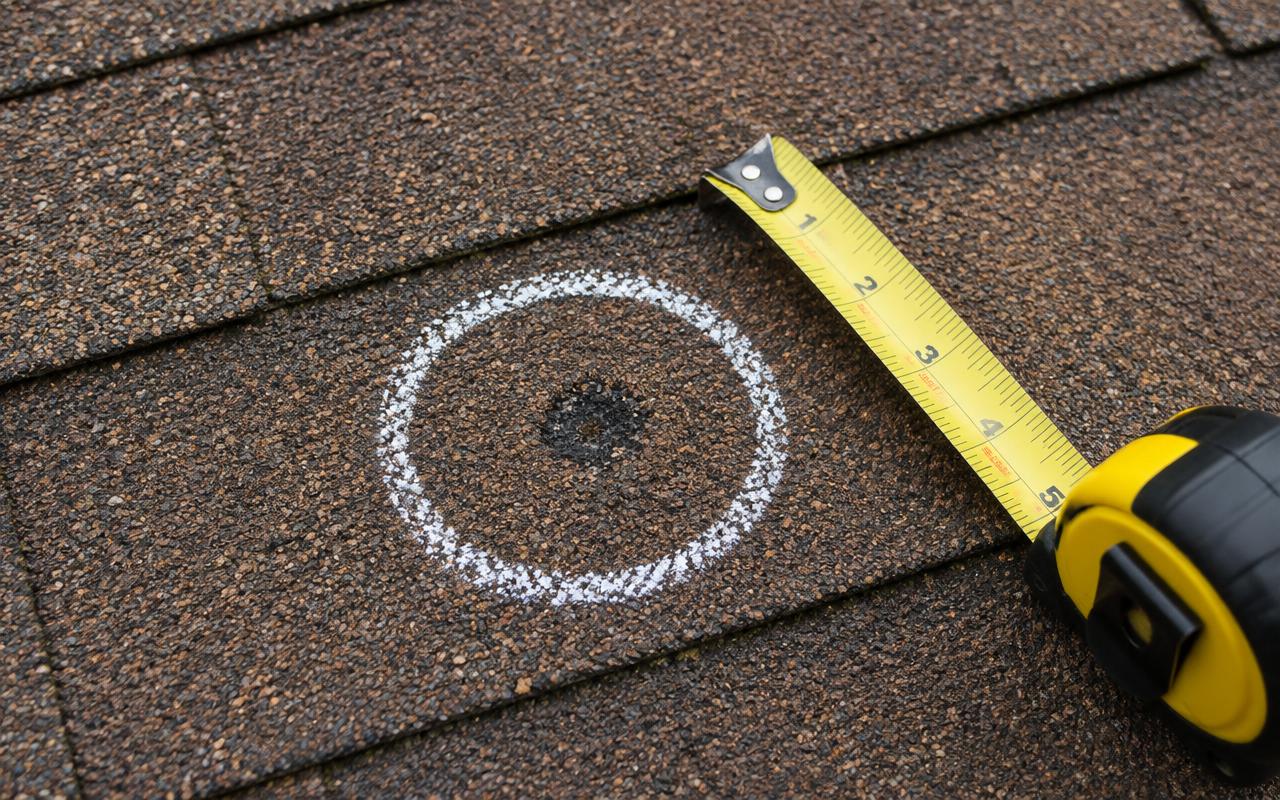
- They mark possible hits with chalk so photos show them clearly.
- They measure marks and note their size and spacing.
- They often count marks inside a set test area on each slope, so they can compare slopes fairly.
- They press gently on some marks to feel for softness under the surface, which can be a sign of a bruise.
- They check the ridge, edges, and pipe boots for other storm damage.
Each step should show up in the photos. If a report has no photos, ask why.
Hail marks versus normal wear
This is the hardest part, and the place where people disagree most. Shingles age in the sun. They lose some stones over time and can crack or blister.
Hail marks are often round or oval. They may show a spot where stones were knocked off and the dark mat shows through. They tend to be random, not in neat lines.
Blisters from heat are small bubbles that pop and leave pits. Scuffs from foot traffic tend to be in paths. Cracks from age often run in lines across many shingles.
A fair inspector explains why they think each mark is hail or wear. They should not call every mark hail. Our hail bruising page goes deeper on this.
Different roofs, different signs
Asphalt shingles are the most common roof on homes in the area. On them, hail can knock off stones, bruise the mat, or crack the shingle.
Metal roofs often dent. Some dents are only cosmetic and do not let water in. Others can break the paint or a seam. The difference matters for repair.
Tile roofs can crack or chip. Wood shakes can split. Flat roofs can show bruises or cracks in the top sheet, which can be hard to see.
Tell the inspector what kind of roof you have, if you know. If you do not, they will tell you.
What a useful report includes
- Your address, the date of the check, and the storm date you asked about
- Photos of each slope, with marks circled
- Counts or notes for each slope
- Notes on soft metal dents
- A clear statement of what the inspector thinks is hail damage, what is wear, and what they are not sure about
- Any other problems found, like loose flashing
- What they suggest next, and why
Keep the report with your storm photos. If you get a second opinion, you can compare them side by side.
Inspections, estimates, and insurance
An inspection report is facts about your roof. An estimate is a price for work. They are not the same, and you may get one without the other.
The Texas Department of Insurance says a roofer cannot act as your public adjuster or offer to pay or waive your deductible. A roofer can share photos and an estimate. Your insurance company decides what is covered.
Insurers often send their own adjuster to look at the roof. You can ask to be there. You can share your own photos and report. If findings differ, our Texas claim guide explains common next steps.
Red flags during a hail inspection
- Someone who says your roof is damaged before they look
- A report with no photos or only close-ups with no context
- Marks that look like they were made by tools
- Pressure to sign a contract on the spot
- Offers to cover your deductible, which Texas law forbids
- Claims that the insurer will surely pay
If something feels wrong, stop and get another opinion.
What drives the cost of an inspection
We do not post prices. These things can change the cost:
- Roof size and how many slopes it has
- Whether the crew needs extra safety gear for a tall or steep roof
- Whether a drone is used along with a person on the roof
- How detailed the written report is
- Whether the inspector also checks the attic area or gutters
Some roofers offer free checks because they hope to do the repair. That is fine, but keep in mind they may have a reason to find work.
After the inspection
If no hail damage was found, keep the report anyway. It shows the roof's state after that storm, which can help later.
If damage was found, decide on next steps. You may plan a repair, file a claim, or get a second opinion. Our storm damage repair page helps you plan the work.
If the inspector found other problems, like old pipe boots, those may be worth fixing even if they are not storm damage.
How long marks stay readable
Fresh hail marks are often easier to read. The black asphalt under knocked-off granules is shiny at first and dulls with sun over time.
Weeks or months later, new and old marks can look more alike. That is one reason to schedule a check soon after a big storm, while the marks are still clear.
Being there during the check
You can ask to be home during the inspection. Stay on the ground. Ask the inspector to show you photos as they go, or to walk you through them at the end.
Ask questions. A good inspector will explain what they found in plain words. If they rush you or will not show photos, that is a warning sign.
Inspections for buyers and sellers
If you are buying or selling a home after a hail season, a roof check can answer questions early. Sellers can learn about problems before listing. Buyers can learn what they are getting.
Ask for the report in writing with photos. If hail damage is found, buyers and sellers can talk about it with their agents. A general home inspection may not look at the roof as closely as a roof inspection does.
Hail and older roofs
Older shingles can be more brittle, so hail may damage them more easily. But older roofs also show more normal wear, which can make hail marks harder to read.
A good inspector will be honest about this. They may say some marks are clearly hail, some are clearly wear, and some are unclear. That honesty is a good sign.
What to do with your report
Put the report in your home file with your storm photos. If you file a claim, you can share it with your insurer's adjuster.
If no damage was found, keep it anyway. It shows the roof's condition after that storm. If a later storm hits, the old report gives a useful starting point.
What the inspector finds and what it usually means
| Finding | What it usually means |
|---|---|
| Round spots with stones gone, random spread | Possible hail hits; check for softness and count |
| Small pits in lines or clusters | Often heat blisters, not hail |
| Dents on vents and gutters only | Hail fell, but shingles may be fine |
| Cracks across many shingles in rows | Often age or heat wear |
| Marks only on one side | Likely storm direction; check that side closely |
| No marks found | Roof may not have been hit hard enough to harm it |
Common questions
- Can a drone do the whole inspection?
- A drone can take helpful photos, especially of steep roofs. It cannot feel for soft spots or look closely under edges. Many good checks use both.
- How big does hail have to be to damage a roof?
- There is no single size that fits every roof. Roof type, age, and the angle of the hit all matter. That is why the roof itself has to be checked.
- Should I climb up to look myself?
- No. Look from the ground and let a trained person go up. Roofs are steep and falls cause serious injuries.
- What if two inspectors disagree?
- Ask each one to show photos and explain their reasons. A third opinion from someone not selling the repair can help.
- Does hail damage always leak right away?
- No. Some hail damage does not leak at first. Over time, knocked-off stones can let sun wear down the shingle faster. That is one reason to check after a big storm.
- Is a free inspection a good idea?
- It can be. Just know the person may hope to sell you a repair. Ask for photos and clear reasons either way.
What happens if you send a request here
This site is a preview. The request form is not connected, so nothing you type is saved or sent. No local roofing partner is confirmed yet, so we cannot promise a visit, a price, or a time. If anyone is in danger, call 911. How this site works.
Sources
- NOAA National Severe Storms Laboratory — Severe Weather 101: Hail detection
- National Weather Service Fort Worth — DFW climate narrative
- Texas Department of Insurance — Roofing and insurance: know the law
- GAF — Should you repair or replace your roof?
Sources checked October 5, 2026. Confirm current rules before acting.