Guides · For homeowners
Dallas Hail Season: Preparing Your Roof
Quick answer
Hail can fall in the Dallas area in many months, but spring is the peak time for severe storms. There are four kinds of hail evidence: a weather warning, a ground report, a radar estimate, and a real roof check. Each tells you something different. Only a check of your own roof shows whether your roof was damaged. Missing records do not mean no hail fell.
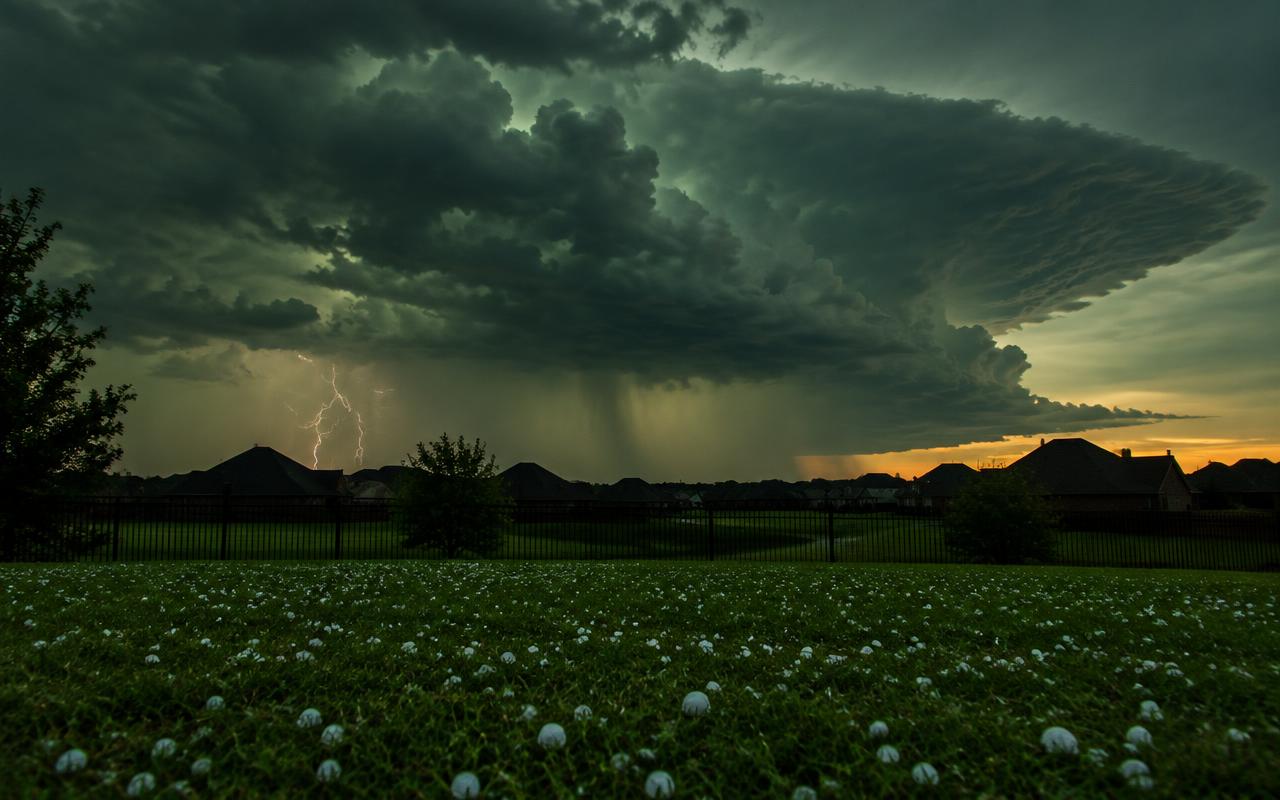
Watch: Hail season in Dallas: what a storm record can and cannot tell you
40 seconds, silent. No narration: on-screen captions carry the message. AI-generated footage. Not a real home, storm, or inspection.
Chapters
Read the caption transcript
Dallas hail is most common in spring. After a storm, you may wonder if your roof was hit.
A warning or a nearby report does not prove hail hit your home. Radar is only an estimate.
Stay safe. Do not climb on the roof. Look from the ground. Stay away from wet wires.
A trained roofer can check shingles, vents, and gutters, and record what they find.
Read the hail season guide for next steps. This site shares information only.
What this page covers
This page helps you get ready for hail season and understand hail information. It explains what warnings, reports, and radar maps can and cannot tell you about your home or building.
After a storm, see our hail damage inspection page for homes or our commercial storm damage page for business roofs. To learn what hail marks look like, see our hail bruising page.
When hail season is
The National Weather Service office in Fort Worth describes North Texas weather in plain terms. Summers are hot. Spring and fall tend to be wetter. Spring is the peak time for severe storms, which can bring hail, strong wind, and tornadoes.
Severe weather happens somewhere in the Metroplex in most years. That does not mean every home or every city is hit each year. Hail paths are often narrow. One part of town can get large hail while another nearby part gets rain.
Evidence type one: a warning
A severe thunderstorm warning from the National Weather Service means a storm that can produce dangerous hail or wind is happening or about to happen in the warned area. It is a safety alert.
A warning is not proof that hail fell at your address. Warned areas are often large. Many homes inside a warning get no hail at all. Use warnings to stay safe and to know when to check later.
Evidence type two: a ground report
A ground report is a note from a person who saw hail. It may come from a trained spotter, a member of the public, or an emergency worker. The Storm Prediction Center posts storm reports, and the National Centers for Environmental Information keep a Storm Events Database.
A report shows that someone saw hail of a certain size at a certain place and time. It does not prove hail fell at your house, even if the report is nearby. It also does not say whether any roof was damaged.
Reports depend on people being there to see and report. That means many storms, or parts of storms, have no report at all. A missing report is unknown, not zero.
Evidence type three: a radar estimate
Weather radar can see hail inside storms. The National Severe Storms Laboratory explains that radar systems can sort hail from rain and estimate hail size. One product, called Maximum Estimated Size of Hail, or MESH, maps estimated hail size over an area.
These maps are helpful to see where hail likely fell. But they are estimates from the sky, not measurements on the ground. They can be off, and they say nothing about whether a roof was damaged.
If someone shows you a radar map of your street, it is a clue. It is not a damage report.
Evidence type four: a roof check
The only way to know if your roof was damaged is to check the roof. A trained person looks at each slope, marks and counts possible hits, checks soft metal, and tells hail marks apart from old wear.
Our hail damage inspection page explains how a good check works and what a useful report includes.
Putting the four together
Think of it like a puzzle. A warning says hail was possible. A report says someone saw hail nearby. A radar estimate suggests where hail likely fell and how big it might have been. A roof check shows what actually happened to your roof.
Each piece helps, but only the last one answers the real question. Be careful with anyone who uses only a warning or a map to tell you your roof needs work.
Get ready before the season
- Have your roof checked before spring if it has not been looked at in a while.
- Take dated photos of your roof and gutters from the ground. These show how things looked before a storm.
- Trim tree limbs that hang over the roof.
- Clean gutters and drains so heavy rain can flow off.
- Find your insurance policy and read the parts about wind and hail.
- Save phone numbers for a roofer, an electrician, and a water damage company.
- For business buildings, make sure night and weekend staff know who to call.
During a hail storm
Stay inside and away from windows and skylights. Move cars into a garage if you can do so before the storm arrives. Do not go outside to check the roof or move things during the storm.
If you have a safe place to watch from, note the time and the size of hail you see. You can compare it to a coin or a ball. Write it down later.
After a hail storm
- Wait until the storm has fully passed.
- Walk around on the ground and look for dents on gutters, vents, and your air conditioner.
- Look inside for new stains or drips.
- Take photos with dates.
- Get your roof checked if you see signs or if neighbors find damage.
Do not climb onto the roof. Hail can leave ice and debris that make a roof extra slick.
Why we do not show a live hail map
Some websites show hail maps that claim to show every storm on every street. We do not, for a few reasons.
Hail data comes from different sources that each have limits. Reports can be missing. Radar is an estimate. Combining them takes care, and errors are easy to make.
We would rather give you clear guidance than a map that looks exact but may not be. If we add local hail data later, we will say where it comes from and what it can and cannot show.
Watch out for storm chasers
After big hail storms, some sellers come from far away and knock on doors. Some are honest. Some push for a fast signature.
Take your time. Ask for a name, a local business address, and a written scope. Check online reviews from more than one site. The Texas Department of Insurance says roofers cannot act as your public adjuster or offer to cover your deductible. Anyone who offers that is breaking Texas law.
Business buildings and hail
Flat roofs on business buildings can be hard to check from the ground. Hail can crack the top sheet or crush the insulation under it without a clear hole.
Owners and managers can plan a check after major storms as part of a maintenance plan. Our preventive maintenance page explains how to set one up.
How to read a storm report list
Storm report lists usually show a time, a place, and a hail size. The place may be a town name or a spot a few miles from a town. The size is what the person saw, often compared to a coin or a ball.
Read the time and place closely. A report a few miles away, or from a different hour, may be from a different part of the storm. Even a report from your own neighborhood only shows that hail fell there, not what it did to any roof.
Why hail paths are narrow
Hail forms in strong updrafts inside thunderstorms. The National Severe Storms Laboratory explains that hail falls when the updraft can no longer hold it up. Storms move, so hail falls in a path, often called a swath.
Swaths can be long and narrow. The biggest hail often falls in only part of the swath. That is why your roof can be fine while a home a mile away is badly hit, or the other way around.
Hail and cars, fences, and plants
Hail often leaves clues on other things around your home. Dents on cars, chipped paint on fences, shredded leaves, and dents in patio furniture can all show that hail fell.
These clues are helpful to note in your photos. They still do not tell you whether the roof was damaged. Roofs are built differently and face the sky at an angle.
Hail season for business buildings
For business buildings, plan ahead with a simple storm checklist. Name who will check the building after storms, even on weekends. Keep roof drawings, warranties, and contacts in one place.
After a large storm in your area, schedule a roof check even if there is no leak. Flat roofs can hide damage under the top sheet. Our commercial storm damage page explains what that check should include.
What to keep in your storm folder
- Dated photos of the roof from the ground, taken before the season
- Notes about each storm, with date and time
- Copies of any storm reports you looked up
- Inspection reports after storms
- Your insurance policy and agent contact
- Receipts for any repairs
A good folder makes it much easier to answer questions later.
Impact-rated shingles
Some shingles are tested and rated for impact. They are made to resist hail better than standard shingles. They are not hail-proof.
Some Texas insurers may offer discounts for certain rated roofs. Ask your agent. If you are replacing your roof, ask your roofer about rated options and what the rating means.
Four kinds of hail evidence
| Evidence | What it can and cannot tell you |
|---|---|
| Weather warning | Hail was possible in a large area; not proof it fell at your address |
| Ground report | Someone saw hail near a spot; not proof your roof was hit |
| Radar estimate (such as MESH) | Likely hail area and size from the sky; not measured roof damage |
| Roof check | What actually happened to your roof |
| No record found | Unknown, not proof that no hail fell |
Common questions
- Does a hail warning mean my roof was hit?
- No. A warning is a safety alert for a wide area. Many homes in a warned area get no hail.
- Can I look up past hail at my address?
- Public databases list storm reports by place and date. They can help, but they miss many storms. Missing records do not mean no hail.
- What is MESH?
- It stands for Maximum Estimated Size of Hail. It is a radar estimate of hail size over an area. It is helpful, but it is not a measurement on your roof.
- Should I get a roof check every spring?
- A check before spring is a good idea if your roof has not been looked at recently. A check after a large storm is also wise.
- Can hail fall outside of spring?
- Yes. Spring is the peak, but hail can fall in other months too.
- Does a nearby hail report help my claim?
- It may help show a storm happened. Your insurer will still look at your roof to decide.
What happens if you send a request here
This site is a preview. The request form is not connected, so nothing you type is saved or sent. No local roofing partner is confirmed yet, so we cannot promise a visit, a price, or a time. If anyone is in danger, call 911. How this site works.
Sources
- National Weather Service Fort Worth — DFW climate narrative
- NOAA National Severe Storms Laboratory — Severe Weather 101: Hail detection
- NOAA Storm Prediction Center — Storm reports
- NOAA NCEI — Storm Events Database
- Texas Department of Insurance — Roofing and insurance: know the law
Sources checked October 5, 2026. Confirm current rules before acting.