Commercial · For owners & managers
Commercial Roof Inspections and Condition Reports in Dallas
Quick answer
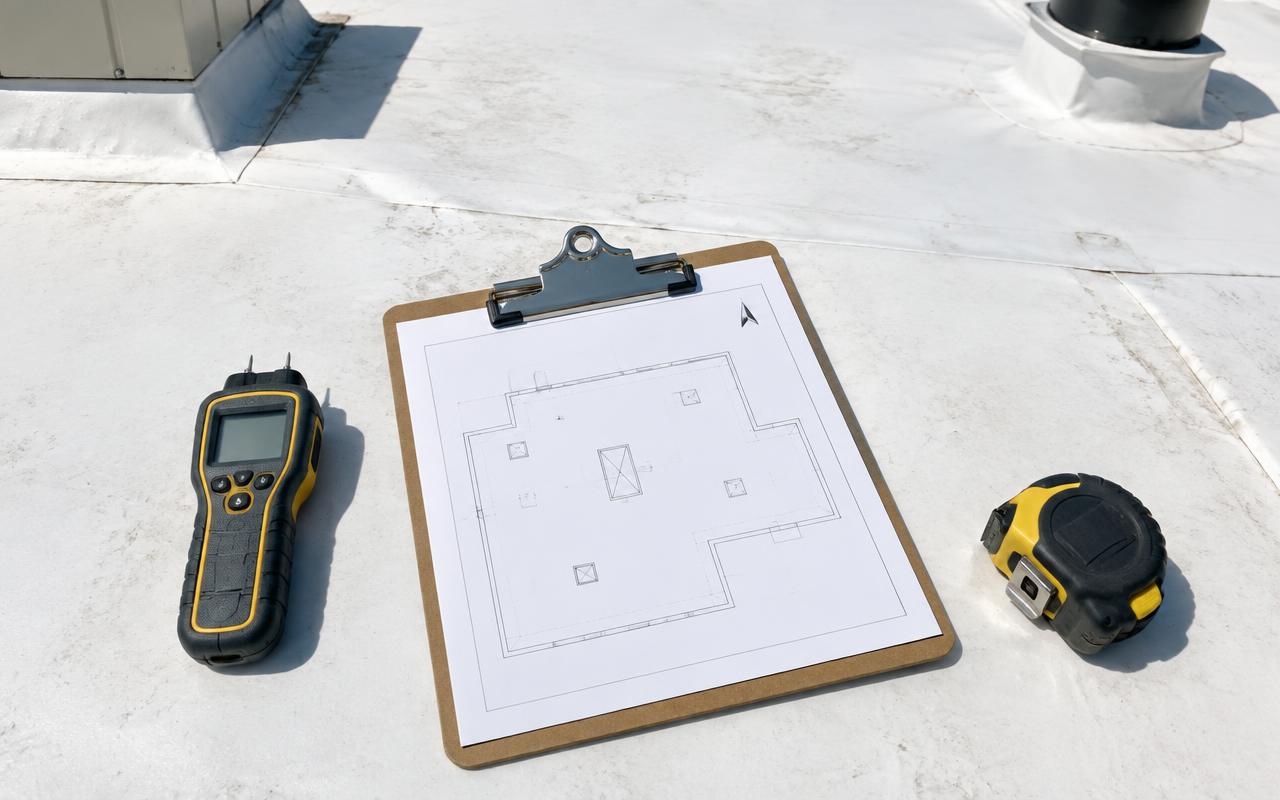
A commercial roof inspection turns your roof into a plan. It tells you what to fix now, what to watch, and what to budget for. A good report has a marked roof map, photos for each finding, and a ranked repair list. A visual check cannot see wet foam under the roof, so add a moisture survey if repairs, a coating, or a new roof are on the table.
What this page covers
This page is for owners, managers, and facility teams who want a clear report on a business roof. It explains what a good report includes and how to use it.
If you need hidden water mapped across the roof, see our moisture survey page. If you want regular visits on a schedule, see our maintenance program page. If water is coming in right now, see our commercial leak page.
Why inspections matter for a business
A roof is one of the biggest parts of a building. It is also one of the easiest to forget, since few people go up there.
An inspection helps you catch small problems before they turn into leaks. It helps you plan spending. It also helps you keep a warranty in good standing, since some warranties require regular checks.
What to gather before the visit
You will get a better report if you share what you know:
- The roof map or building plans, if you have them
- The roof's age and type, if known
- Warranty papers
- A list of past leaks and repairs
- Where water has shown up inside
- How to get onto the roof safely
If you do not have these, that is fine. The inspector can still do the work. It may just take a bit longer.
What a good inspection checks
A careful inspector looks at the whole roof, not just one spot:
- The top sheet, called the membrane, for cracks, holes, and wear
- Seams, where sheets join
- Flashing, which is the seal where the roof turns up walls and curbs
- Curbs, the raised boxes under air units
- Drains, gutters, and scuppers, which are wall openings for water
- The low walls around the roof, called parapets, and their metal caps
- Pipes, vents, and skylights
- Supports for equipment
- Spots where water sits after rain
- Signs of hail or wind damage
What a visual check cannot see
Some problems are hidden under the top sheet. The biggest one is wet foam boards. These boards are called insulation.
A visual check might spot soft areas or blisters. But it cannot map how far water has spread.
If you are thinking about repairs, a coating, or a new roof over the old one, add a moisture survey. It uses meters, heat cameras, or small test cuts to show where water is.
What the report should include
A strong report is easy to act on. Look for these parts:
- A roof map with each finding marked
- A photo for each finding
- A note on where each photo was taken
- A ranked list: urgent, soon, and watch
- The likely cause of each problem
- A range for how much life the roof has left, with reasons
- Suggested next steps
If the report is just a page of notes with no map or photos, ask for more.
How often to inspect
Many owners inspect twice a year, often in spring and fall. They also check after big storms.
The National Weather Service says spring is the peak severe storm season in North Texas. A spring check helps you catch storm damage early. A fall check helps you get ready for winter rain.
Some warranties set their own schedule. Read yours and follow it.
Using the report for budgets
Share the report with whoever plans spending. The ranked list helps you decide what to pay for this year and what can wait.
Over a few years, reports show a trend. If problems grow each year, start planning for a coating or a new roof. Planning ahead lets you pick the timing and get fair bids.
Using the report with your insurer
If an inspection finds storm damage, the photos and roof map help explain it. Your insurance company decides what is covered.
The Texas Department of Insurance says a roofer doing work on your building cannot also act as your public adjuster. A roofer can document what they see. That is different from handling your claim.
Safe roof access
Inspectors need a safe way onto the roof. Plan this before the visit:
- Who has the key to the roof hatch?
- Is a ladder or lift needed?
- Does someone need to go along?
- Are there skylights that need guards?
Do not send staff up to look for damage during a storm. Only trained people with fall safety gear should be on the roof.
Drones and other tools
Some inspectors use drones for overview photos. Drones help on very large roofs or when access is hard.
But drones cannot test a seam or feel a soft spot. A close look by a person on the roof is still needed for a full report.
Many buildings, one format
If you manage more than one building, ask for the same report format at each site. Then you can compare roofs side by side.
A simple spreadsheet with each roof's type, age, warranty, and condition makes planning much easier.
What drives the cost
We do not post prices. These things change the cost of an inspection:
- Roof size and how many roofs
- How hard the roof is to reach
- Whether a moisture survey is added
- How detailed the report and map are
- Drone use
Questions to ask an inspector
- Will findings be marked on a roof map?
- Will every finding have a photo?
- Do you sort items by how urgent they are?
- Is a moisture survey included or separate?
- Do you also sell roofing work?
- Can we get the report in the same format each time?
Before you buy or lease a building
If you plan to buy or lease a business building, a roof check is a key part of your review. A roof problem can change what the building is worth.
Ask for the roof's age, type, and warranty from the seller or landlord. Then have an inspector confirm the condition. If a new roof is coming soon, it may change your offer or your lease terms.
If you lease, read who pays for roof repairs. Some leases put that on the tenant. Others leave it with the owner. Knowing this before you sign avoids arguments later.
Common problems found on Dallas business roofs
Every roof is different, but some problems show up often on low-slope roofs:
- Open or weak seams
- Loose or cracked flashing at air units
- Clogged drains and standing water
- Dried-out sealant in pitch pans around pipes
- Gaps in the metal caps on low walls
- Holes from dropped tools or foot traffic
- Blisters, which are bubbles between roof layers
Most of these can be fixed if caught early. That is the main reason regular checks pay off.
Reading the remaining life estimate
Many reports include a guess about how many years the roof has left. Treat this as a range, not a promise.
Ask the inspector what the guess is based on. Good reasons include the roof's age, how worn the top sheet is, how many repairs it has needed, and how much water is hidden below.
Use the range to plan your budget. If the range is short, start collecting bids early so you are not rushed.
Inspections after a new roof
A new roof still needs checks. Problems from the install often show up in the first year or two.
If the roof has a maker's warranty, the maker may have done its own check at the end of the job. Keep that report. Then follow the warranty's schedule for future checks, and send any problems to the roofer while the work warranty is still active.
Getting staff to report problems
People inside the building are often the first to notice a leak. Make it easy for them to report it.
Put up a simple note with who to call and what to write down. Ask them to include the date, the spot, and a photo. These reports feed your leak log and help the next inspection focus on the right places.
Inspection versus maintenance
An inspection tells you what is wrong. A maintenance visit fixes small things on a schedule. Many owners pair the two, with a full inspection once a year and lighter upkeep visits in between.
If your budget is tight, start with a good inspection. It shows where your money will do the most good. Then add regular upkeep for the drains and seals that need it most.
What to do right after the visit
Read the report within a week while the visit is fresh. Ask the inspector to walk you through anything that is not clear.
Then pick the urgent items and get them fixed first. Put the watch items on your calendar for the next visit. File the report with your roof records so the next inspector can compare.
What the report shows and what it usually means
| Report shows | What it usually means |
|---|---|
| A few small items on a dry roof | Make a repair list and keep up regular checks |
| Many open seams or soft spots | Add a moisture survey before big decisions |
| Water sitting in the same areas | Look at drainage fixes |
| Storm damage on many parts | Document it and review your policy |
| Warranty needs regular checks | Follow the warranty's schedule |
Common questions
- How long does a commercial inspection take?
- It depends on the roof size and access. A small roof may take an hour or two. A large one can take most of a day.
- Do we need to be there?
- Someone usually needs to open the roof hatch and share facts about leaks. Plan who will meet the inspector.
- Will the inspector cut into the roof?
- Only if a test cut is needed and you agree. A test cut should be patched right after.
- Can one inspection cover several buildings?
- Yes. Ask for the same report format for each one so you can compare.
- What if the report says the roof is fine but we still have leaks?
- Share your leak log with the inspector and ask them to look again at those exact spots. Some leaks come from walls, air units, or pipes inside the ceiling rather than the roof. A moisture survey can also find hidden water that a visual check missed.
- What are blisters on a flat roof?
- Blisters are bubbles between roof layers. They form when trapped air or moisture swells in the heat. Small, unbroken blisters may only need watching. Large or cracked ones should be repaired before water gets in.
- Should the inspector check the inside of the building too?
- Yes, if possible. Stains on ceiling tiles, rust on the steel deck, and wet spots along walls point the inspector to problem areas on the roof above. A quick walk inside before going up makes the roof check more focused.
What happens if you send a request here
This site is a preview. The request form is not connected, so nothing you type is saved or sent. No local roofing partner is confirmed yet, so we cannot promise a visit, a price, or a time. If anyone is in danger, call 911. How this site works.
Sources
- National Weather Service Fort Worth — DFW climate narrative
- Texas Department of Insurance — Roofing and insurance: know the law
- GAF — Mitigating water on roofs
Sources checked October 5, 2026. Confirm current rules before acting.