Homeowners · For homeowners
Roof Leak Repair in Dallas: Tracing Water to Its Source
Quick answer
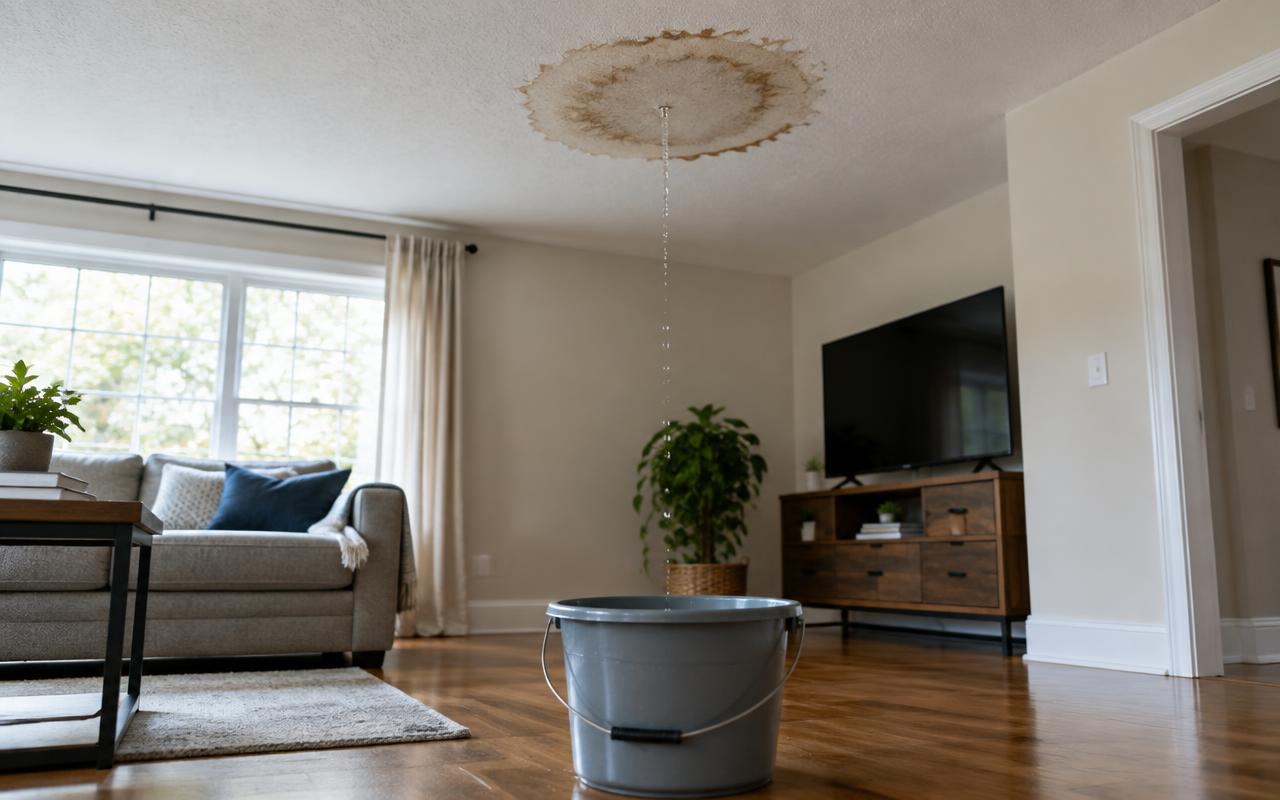
A roof leak shows up where the water lands, not where it gets in. Water often enters higher up and runs along the wood before it drips. First protect your home and stay safe. Then rule out pipes and air units, and find the real way in before anyone patches the roof.
What this page covers
This page is for homeowners who see water inside and do not know where it comes from. You might have a stain on the ceiling, a drip, or wet insulation in the attic.
If you can see damage on the roof but no water inside, our home roof repair page fits better. If there is a big hole and rain is on the way, see our page on emergency roof tarping. If the building is a business, see our commercial leak page.
Stay safe first
Water and power do not mix. If water is near lights, outlets, or a ceiling fan, stay away from that area.
If you can reach your breaker panel from a dry, safe place, you can turn off power to that room. If the panel is wet or you are not sure, do not touch it. Call an electrician or emergency help instead.
Never climb onto your roof in the rain or during a storm. Wet shingles are slick, and wind can knock you off balance. Wait for a dry day and a trained person.
Protect your things in the first hour
A few quick steps can save floors and furniture:
- Move furniture, rugs, and electronics away from the drip.
- Put a bucket or pot under the drip, with a towel inside to stop splashing.
- If the ceiling bulges like a bubble, it is full of water. Stand clear and call for help, since it can fall.
- Take photos of the stain, the drip, and any damage.
- Write down the time and how hard it is raining.
These notes will help a roofer, and they help if you talk to your insurance company later.
Is it really the roof?
Many ceiling stains are not roof leaks at all. Before you pay for roof work, think about other causes:
- The air conditioner in the attic drips water from a drain pan or line.
- A water pipe in the ceiling or wall has a small leak.
- A bathroom fan sends warm, wet air into the attic instead of outside.
- Rain gets in around a window or through the siding above the stain.
- Cold air ducts sweat on humid days and drip.
Here is a good clue. If the drip shows up on a dry day, it is likely not the roof. If it only happens in rain, the roof or walls are more likely.
Read the pattern of the leak
When a leak happens tells you a lot about where to look.
If it leaks in every rain, there may be a hole, a missing shingle, or a cracked pipe boot. A pipe boot is the rubber collar around a plumbing pipe on the roof.
If it leaks only when wind blows rain from one side, look at that side of the house. Check walls, the chimney, and siding. The metal seals there are called flashing.
If it leaks only in very long, heavy rain, water may be backing up in a valley or gutter. A valley is the low line where two parts of the roof meet.
Keep a short log of each leak. Write the date, the wind, and how long it rained.
Follow the water in the attic
Do not walk across the attic. If the attic door opens to a floored, well-lit spot, you can shine a flashlight from the opening. If not, or if wires are near wet spots, stay out and let a trained person look.
Start above the stain. Then look uphill along the wood boards. Water often runs along the boards or a beam before it drips down.
Look for dark trails, wet wood, or rusty nail tips. Do not touch damp insulation or anything near wires. Note the spot that is highest up the roof. That is closer to where water gets in.
Common ways water gets in
On homes around Dallas, these are some of the most common leak spots:
- Pipe boots that crack after years in the sun
- Flashing along walls that pulls loose or rusts
- Chimney flashing that cracks or has only caulk holding it
- Valleys that wear out or fill up with leaves
- Nail holes from an old satellite dish
- Shingles lifted or torn by wind
- Vents and skylights with worn seals
Most of these are small fixes once they are found. The hard part is finding the right one.
How a good leak visit works
A careful roofer treats a leak like a puzzle. They should follow steps like these:
- Ask about your notes, photos, and when the leak shows up.
- Have a trained person follow the water trail in the attic.
- Look at the roof above the trail, not just above the stain.
- Check pipe boots, flashing, valleys, and vents nearby.
- If needed, spray water on one small area at a time to see when the drip starts.
- Fix the cause and explain what they found.
- Ask you to watch the spot during the next rain.
A water test takes time, but it can find leaks that a quick look misses.
Why patches sometimes fail
Some leaks come back after a repair. The most common reason is that the real entry point was not found.
Caulk is a thick paste that seals small gaps. It can slow a leak for a while. But sun and heat break it down. Flashing that is held only by caulk will often leak again.
If your leak returns, ask the roofer to look again. Ask what else could be the cause. A good roofer will want to find it too.
Damage inside your home
Water can soak drywall, insulation, and wood. Wet insulation should be dried or replaced. Wet drywall that sags or stays soft often has to be cut out. A water damage pro can tell you.
Roofers fix the roof. Fixing the ceiling and walls inside is often a different trade. Ask if inside repair is part of the price or a separate job.
If water sat for a while and you smell mold, a mold expert may be needed. Do not breathe in dust from moldy materials.
Insurance and leaks
Some leaks are covered by insurance and some are not. It depends on what caused the leak and on your policy.
The Texas Department of Insurance says a roofer working on your home cannot also act as your public adjuster. They also cannot pay or waive your deductible. A deductible is the part you pay before insurance pays.
A roofer can give you photos and a written estimate. That is useful. But you talk to your insurance company yourself, or hire a licensed adjuster if you want help.
What drives the cost
We do not list prices, because each leak is different. These things change the price:
- How long it takes to find the leak
- Whether the attic is easy to reach
- What the cause is, like a boot, flashing, or a valley
- How steep and high the roof is
- Whether wood under the shingles is rotted
Ask for a written list of what the price covers. Ask what happens if the leak comes back.
Questions to ask a roofer
- How did you find where the water gets in?
- What will you do if the leak comes back?
- Will you check the attic as well as the roof?
- Is fixing the ceiling part of this price?
- Can you send photos of what you found and what you fixed?
Clear, calm answers are a good sign. Be careful with anyone who pushes you to replace the whole roof before finding the leak.
Leaks around chimneys and skylights
Chimneys and skylights are two of the trickiest spots on a roof. Each one makes a hole in the roof that has to be sealed on every side.
A chimney uses layers of metal that tuck under the shingles and into the brick. If the top layer pulls out of the brick, water can run behind it. Caulk alone will not hold for long in Texas sun.
A skylight can also leak from its glass seal, not just the roof around it. If you see water between the panes of glass, the skylight itself may be failing. If water shows on the frame after rain, the seal around it is more likely the cause.
Keep notes after the repair
Once the leak is fixed, keep your log going for a few weeks. Check the attic and ceiling after the next two or three rains.
If the stain does not grow and the attic stays dry, the repair likely worked. Paint over the stain only after you are sure it is dry. A stain-blocking primer helps keep the brown mark from coming back through.
When a leak shows up in a new home
New homes can leak too. Most often, the cause is a missed seal at a wall, a vent, or a window, rather than worn shingles.
If your home is still under a builder warranty, call the builder first and keep copies of everything you send. If a new roof was just put on, call the roofer who did the job, since their work warranty may cover the fix.
Roof leaks and your attic air flow
Sometimes water in the attic is not rain at all. Warm, wet air from the house can rise into a cold attic and turn into drops on the nails and wood. This happens most in cooler months.
If you find frost or many tiny drops on nail tips, ask about attic air flow and bath fans instead of roof holes.
Clues and what they usually mean
| Clue | Where to look first |
|---|---|
| Drip on a dry day | Air unit drain, pipes, or sweating ducts |
| Leak only when wind blows from one side | Walls, chimney, and siding on that side |
| Stain near a bathroom or kitchen | Pipe boots and vents above |
| Leak only in long, heavy rain | Valleys and gutters backing up |
| Leak returns after a patch | The real entry point is still unknown |
Common questions
- Why is the stain far from where the water gets in?
- Water can run along the wood boards and beams before it drips. The drip can be several feet from the hole.
- Should I poke a hole in a bulging ceiling?
- A bulge full of water can fall. Stand clear, keep people away, and get help. Do not stand under it.
- Is every leak an emergency?
- Water near power is urgent, and so is a large opening before more rain. A slow drip far from power is less urgent, but it still needs care soon.
- Can I fix a leak with caulk?
- Caulk can slow a leak for a short time. Sun breaks it down. A lasting fix seals the real gap the right way.
- Can a leak start inside the walls instead of the ceiling?
- Yes. Water that gets in at a wall flashing or window can run down inside the wall. You may see peeling paint, swollen trim, or stains low on the wall instead of on the ceiling.
What happens if you send a request here
This site is a preview. The request form is not connected, so nothing you type is saved or sent. No local roofing partner is confirmed yet, so we cannot promise a visit, a price, or a time. If anyone is in danger, call 911. How this site works.
Sources
- GAF — Should you repair or replace your roof?
- Texas Department of Insurance — Roofing and insurance: know the law
Sources checked October 5, 2026. Confirm current rules before acting.