Homeowners · For homeowners
Emergency Roof Tarping After a Dallas Storm
Quick answer
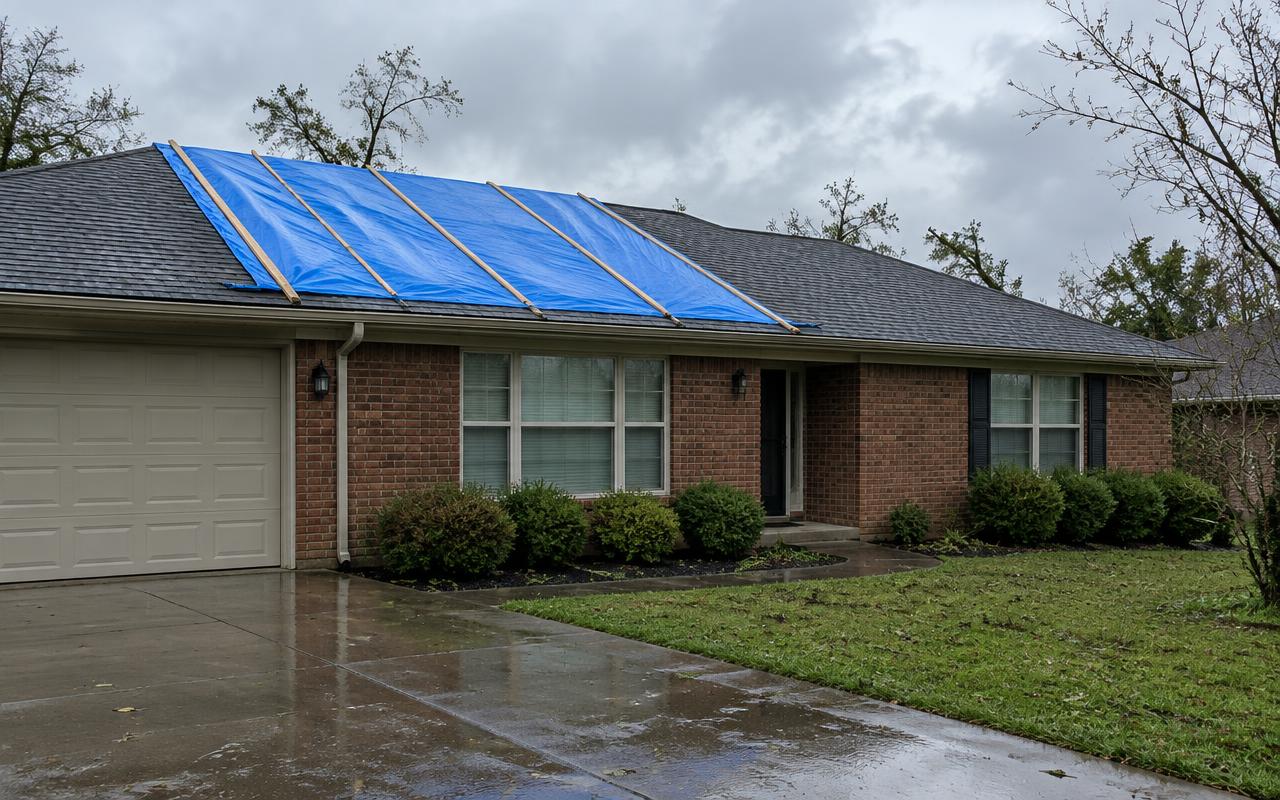
A roof tarp is a short-term cover. It helps slow water from getting in after a storm opens a hole or tears off shingles. It is not a repair. Stay off the roof in a storm, keep away from wet wires, and let a trained crew put the tarp on once the weather is safe. Take photos first, and plan the real repair soon after.
What this page covers
This page is about the first few days after a storm hurts a home roof. Maybe a tree limb punched a hole. Maybe wind pulled off a patch of shingles and now you can see the dark layer under them. Maybe water is coming in, and the sky still looks bad.
Here you will learn what a tarp can and cannot do, when it makes sense, how a good crew puts one on, and what to do before and after. If the storm is over and you only want to know if there is damage, our hail damage inspection page and storm damage repair page fit better.
Safety comes first, every time
Do not climb onto a roof during a storm, in high wind, or while the roof is wet. Wet shingles are slick. Wind can push a tarp like a sail and pull you off. Lightning is another real danger.
If water is near lights, outlets, or a ceiling fan, stay out of that room. If you can reach your breaker panel from a dry, safe spot, you may turn off power to that room. If the panel area is wet or you are not sure, do not touch it. Call an electrician or emergency help.
If a tree is resting on your house, or the ceiling is sagging, leave that part of the home. Call 911 if anyone is hurt or if a power line is down. Stay far away from any fallen line.
What a tarp can do
A tarp covers an opening so less rain gets in. It buys time. It can help keep wet spots from growing while you set up a real repair.
A tarp works best when it covers the open area plus a wide margin around it. It should reach up and over the ridge when possible, so water runs off the top of the tarp instead of under it.
It is also a way to show you tried to limit more damage. Many home insurance policies ask owners to take reasonable steps to protect the home after a loss. Read your own policy, or ask your agent, to learn what yours says.
What a tarp cannot do
A tarp does not seal a roof. Wind can lift edges. Sun breaks down plastic over time. Nails or screws used to hold it can make new holes if they are put in the wrong place.
A tarp also does not fix wood that broke. If a limb cracked a rafter, which is a sloped wood beam that holds up the roof, that is a framing problem. A tarp over it may hide how bad it is. In Dallas, the city's permit guide says work on rafters or joists needs its own alteration permit, apart from the roofing permit.
Think of a tarp like a bandage on a cut. It helps, but the cut still needs real care.
Before anyone goes up: take photos
Once you are safe, take photos and short videos from the ground and from inside. Do this before the tarp goes on, if you can do it safely. A tarp can cover the very thing you need to show later.
- Wide shots of each side of the house
- Close shots from the ground with your phone's zoom
- Inside shots of stains, drips, and wet spots
- Any limbs, shingles, or metal pieces in the yard
- The date and time, which most phones save for you
Write down what you saw and when. A simple note on your phone is fine. Keep any receipts for buckets, towels, fans, or a hotel night.
How a careful crew puts on a tarp
A good crew waits until wind and lightning have passed. They use ladders tied off at the top and safety gear. They do not rush onto a wet, steep roof.
- They clear loose limbs and broken pieces from the area first.
- They pick a tarp big enough to cover the hole with room to spare.
- They run the tarp up and over the ridge when they can.
- They roll the edges around wood strips, then fasten the strips, so wind does not tear the plastic.
- They try to fasten in spots that will be replaced anyway, to avoid new holes in good shingles.
- They check that water will flow off the top and not pool in a fold.
Sandbags are sometimes used on lower slopes. Each roof is different, so ask the crew how they plan to hold the tarp and why.
Tarps on different roof shapes
On a steep roof, a crew can often run the tarp over the ridge so water sheds off the top. On a low or nearly flat part of a roof, water can pool on a tarp and find its way under. Crews may use different ways to hold it there, such as weights, and they watch for puddles.
Near a chimney, skylight, or wall, water likes to slip behind the tarp. A crew may need to tuck the top edge under higher shingles or seal it in a way that can be undone later. Ask how they will handle these spots.
Inside the home while you wait
Move furniture, rugs, and electronics away from drips. Put down towels and buckets. If a ceiling has a bulge of water, keep people and pets away from under it. A trained person can decide how to drain it safely.
Open windows and run fans only if the air outside is dry and there is no electrical risk. Wet drywall, carpet pad, and insulation can grow mold if they stay damp. A water damage company can measure moisture and tell you what needs to dry or come out.
How long a tarp should stay
There is no set time that fits every roof. Sun, wind, and how well the tarp was put on all matter. Plastic tarps break down in strong sun, and Dallas summers are hot and bright, as the National Weather Service notes for the area.
Check the tarp from the ground after each wind or rain. Look for flapping edges, sagging spots that hold water, or new drips inside. If you see any, call the crew back. Do not go up yourself.
The best plan is to treat the tarp as short-term and get the real repair on the calendar.
Questions to ask the tarp crew
- Will you take photos before and after the tarp goes on?
- How will you hold the tarp down, and where will fasteners go?
- Will you check the attic or ceiling area, or only the roof?
- Do you see any broken wood or framing?
- Is the tarp charge separate from any later repair?
- What should I watch for until the repair is done?
Get the answers in writing, even in a text. Keep a copy with your photos.
What drives the cost of a tarp
We do not post prices, since every job is different. These things usually change the cost:
- How big the opening is and how many tarps it needs
- The pitch of the roof and how many stories up the crew must work
- Whether limbs or debris must be cleared first
- Whether it is night, a holiday, or right after a big storm when many homes need help
- Whether the crew also covers inside areas or sets up drying
Insurance and who does what
The Texas Department of Insurance explains that a roofer cannot act as your public adjuster. A roofer also cannot offer to pay or waive your deductible, or give a rebate to cover it. Those are against Texas law.
A roofer can give you a written estimate and photos of what they found. Talking with your insurance company is your job, or the job of a licensed public adjuster you hire. Our insurance claim guide explains these roles in more detail.
If anyone tells you a tarp means your claim is approved, be careful. Only your insurance company decides what is covered.
Watch out for pressure after a storm
After big storms, people sometimes knock on doors and push for a fast signature. Take your time. Ask for a name, a business address, and a written scope. Do not sign anything that hands over your claim or lets someone talk to your insurer for you unless you clearly mean to.
A tarp is a small job. It should not lock you into a full roof deal. Read every page before you sign.
After the tarp: the real fix
Once the storm has passed and the roof is covered, the next step is a full look at the roof. A roofer should check the whole roof, not just the hole. Hail or wind may have hurt other areas you cannot see from the ground.
Then you can decide between a repair and a bigger job. Our storm damage roof repair page walks through that choice. Our roof replacement page explains when a full new roof makes more sense.
Tarp or more? What you see and what it may mean
| What you see | What it may mean |
|---|---|
| A few shingles gone, no drip inside | A tarp may help until a repair, if rain is coming |
| Hole from a limb, water coming in | Tarp after the weather is safe, then check the wood |
| Ceiling sagging or bulging | Keep clear; get trained help before anything else |
| Water near lights or outlets | Stay away; use qualified electrical help |
| Tree still resting on the house | Stay out of that area; call a tree pro and 911 if needed |
| Tarp flapping after a wind | Call the crew back to fix it |
Common questions
- Can I put a tarp on myself?
- We do not suggest it. Roofs are steep and slick after rain, and falls cause serious injuries. A trained crew with safety gear is the safer choice.
- Does a tarp mean I need a new roof?
- No. A tarp only covers an opening for now. A full check later will show if a small repair or a bigger job makes sense.
- Should the crew put a tarp on before or after photos?
- Photos first, when that can be done safely. The tarp can hide the damage you need to show later.
- How do I know the tarp is still working?
- Look from the ground after wind or rain. Check inside for new drips. If edges flap or water pools on the tarp, call the crew back.
- Will my insurance pay for the tarp?
- That depends on your policy and your claim. Only your insurance company can tell you. Keep the receipt and photos either way.
- Can a roofer handle my claim for me?
- In Texas, a roofer cannot act as your public adjuster. They can give you photos and an estimate. You or a licensed public adjuster you hire deals with the insurer.
- Is it safe to stay in the house with a tarp on the roof?
- Often, yes, if the framing is not broken and there is no electrical risk. If a ceiling sags, a tree is on the house, or you are unsure, stay out of that area and ask a trained person.
What happens if you send a request here
This site is a preview. The request form is not connected, so nothing you type is saved or sent. No local roofing partner is confirmed yet, so we cannot promise a visit, a price, or a time. If anyone is in danger, call 911. How this site works.
Sources
- National Weather Service Fort Worth — DFW climate narrative
- City of Dallas — Development Services permit guide
- Texas Department of Insurance — Roofing and insurance: know the law
- GAF — Should you repair or replace your roof?
Sources checked October 5, 2026. Confirm current rules before acting.