Guide · Informational preview
Stone-Coated Steel Roofs: Find the Right Parts and Repair Scope
A stone-coated steel roof uses shaped metal panels with a stone-grain face. The face can look like tile, shake, or shingles. The name alone does not tell you how the panels attach. Find the maker, model, and roof build before you plan work. A surface touch-up, a new panel, and work on the layers below are different jobs.[AG05][AG01]
Informational preview. No Dallas roofing provider, service coverage, phone, or working intake has been verified.
Review status: Original educational draft. Named author and qualified roofing review are pending.
Start with the panel, not its street view
From the yard, a textured roof can be hard to name. A tile shape does not prove that it is clay. A shake pattern does not prove that it is wood. Use the look as a lead. Ask a roofer to confirm what is there through safe access and product records.
Find any saved bid, wrapper, spare piece, or roof care sheet. A sales brochure may show a whole brand range. The job may use only one model in that range. Copy the full model name, not just the brand. Note which source ties it to your roof.
You do not need to lift a panel to get this fact. Ask for a safe, planned check if the records are thin. A loose piece found on the ground may come from a past roof. Keep that doubt clear. Do not use an unverified piece to order a repair.
Make a small sketch with one name per roof face. The garage or porch may have a different roof. This first map stops a product fact about the house from being applied to the wrong part. Leave blank fields marked unknown until someone can check them.
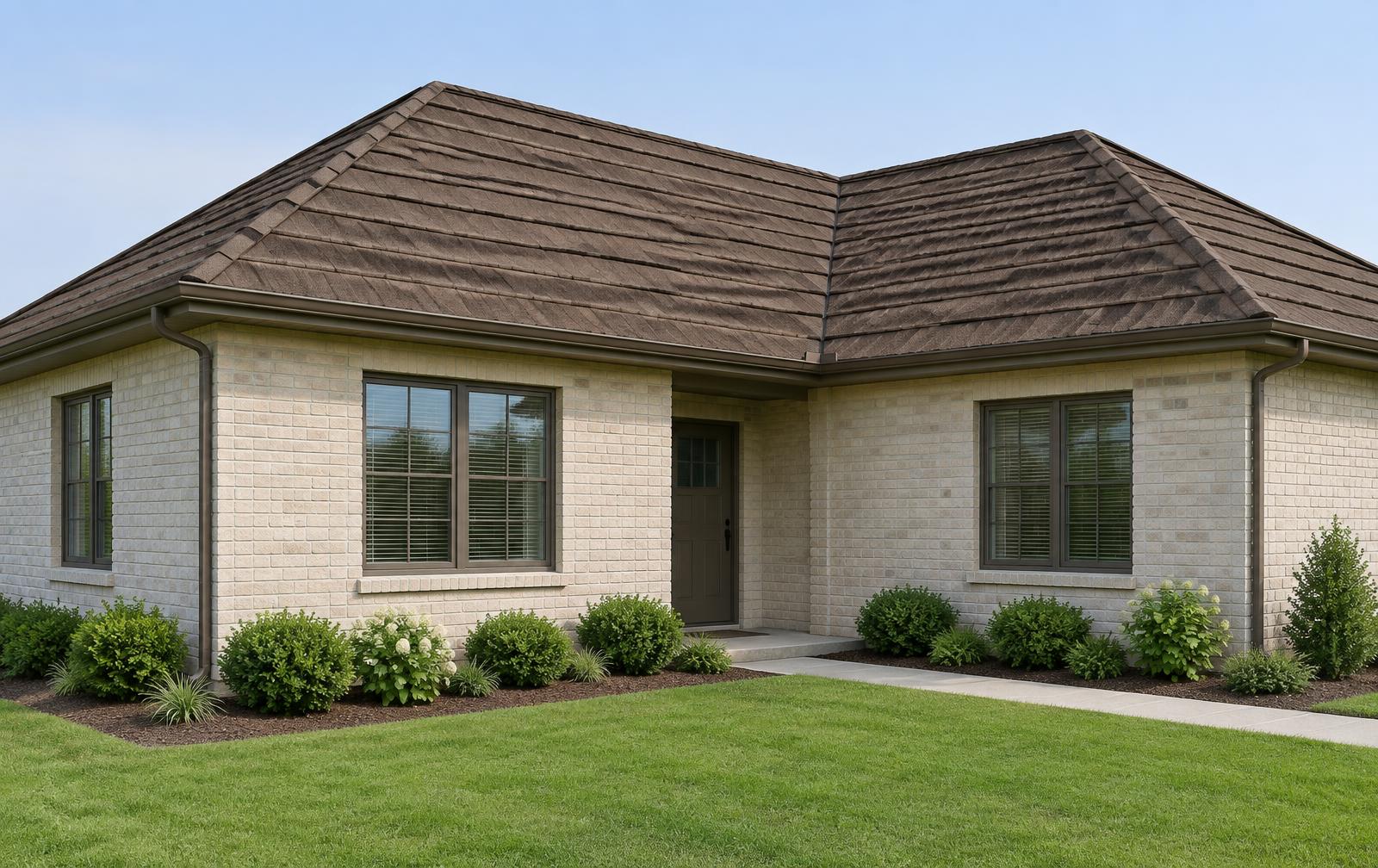
- Stone-textured face
- Formed steel panel
- Layers below
- Named batten method
- Named direct-to-deck method
- Matching part
- Repair boundary
Support depends on the exact product. This is not an installation design or a universal repair recipe.
Illustrative planning diagram, not a measured report or official form.
Learn the two support questions
DECRA lists separate guides for some roofs set on battens and others set direct to deck. Battens are strips that support the panels above the deck. The deck is the broad base below the roof covering. The maker also lists a model with both methods. These are named-product examples, not a rule for all brands.[AG01][AG03]
Ask which guide fits the roof you own. Then ask how the roofer confirmed the support method. A guess from the panel shape is not enough. The same broad roof label can hide key differences below its face.
Direct to deck does not mean every layer below can be skipped. For example, the DECRA XD guide calls for underlayment. That is a sheet layer below the panels. The guide also has its own deck and edge details. Read those as one model's needs, not a recipe for your roof.[AG02]
For an older roof, ask whether the support method is known from records or from a check. Ask what parts will become visible during repair. A clear unknown can be priced as an open question. An assumed base can leave a gap in the work list.
Keep this roof separate from other metal roofs
The shaped panels shown in DECRA's tile and shake guide have their own ends, overlaps, and trim. Their batten spacing depends on the profile. Profile means the panel's shape. Those details give this roof family a distinct parts-and-fit question. A generic metal label loses useful information.[AG03]
Our standing seam guide covers a different panel choice. Do not borrow a repair detail just because both roofs contain steel. Ask for the drawing that matches the exact panel and place on this roof.
The same caution applies to a screw-down roof repair plan. A price to replace exposed screws across long panels does not describe how to restore a shaped panel's joint. The exposed-fastener roof guide can help you tell those scopes apart.
If two bids name different roof types, settle the name first. Ask each firm to show the basis for its label. Keep that answer with the bid. Comparing two prices before you know what each one repairs will not give you a fair choice.
Watch: Stone-Coated Steel Roofs: Find the Right Parts and Repair Scope lesson
Captions will appear here when the video plays.
42 seconds, silent. No narration: on-screen captions carry the message. Silent, caption-led AI teaching footage and editor-made graphics. Not a real property, job, test, inspection, approval, service or credit offer.
Chapters
Read the caption transcript
A textured roof may look like tile or shake while its panels are steel. Start with the exact maker and model.
Then ask how the panels are supported. Some named systems use battens. Others use a direct-to-deck method with required layers below.
Keep three questions apart: is the issue on the face, in the panel, or under the roof? Ask how new parts will join the old ones. A touch-up kit does not answer every repair question.
Stay off the roof. Build a short question sheet, and have a trained roofer explain the matching parts and repair boundary.
Sort the face, panel, and hidden layers
Use three lines when you read a roof finding. First, what changed on the face? Next, what changed in the metal panel or its join? Last, what is known about the layers below? Ask the report to keep each answer tied to a place.
A small bare patch and a bent panel do not ask the same question. Nor does a leak by a wall prove that a nearby scuff caused it. Ask the roofer to explain the link between the observed mark and the work they suggest. A close-up alone may leave out the joint.
DECRA's XD guide distinguishes its touch-up finish from joint sealant. It says sealant is not for refinishing a damaged panel face. The Villa Tile guide also points to named touch-up kits. This supports a narrow question: which approved material fits the actual task? It does not prove that any marked panel can be saved.[AG02][AG04]
Do not scrape the face, bend a corner, or test a patch yourself. Preserve the condition for a trained person to assess. If the report only says damaged roof, ask for more detail. You need a work boundary, not a scarier label.
Ask how a panel repair will join back in
A local panel repair needs more than a count of new pieces. Ask which panels must be disturbed to reach the work. Which ones can go back? What will happen at the repair's upper and side edges? Have the bidder explain the full joined area.
Request the maker and model of the proposed replacement pieces. If the original line is no longer sold, ask what supports the proposed substitute. A similar shape or close color is not proof of a fitting joint. Leave the choice open until the fit is checked.
The same questions apply to trim. DECRA's guides show model-specific ridge, edge, wall, and valley details. A valley is the channel where two slopes meet. Ask the roofer to name the needed parts and the matching guide. Do not choose them from a photo in this article.[AG02][AG03][AG04]
Keep appearance on its own line. Ask whether new pieces may look different from the older field. Ask to review a lawful sample at ground level. A color concern deserves a clear answer. It should not be confused with proof that the whole roof has lost its function.
Review metal contacts and added roof work
The DECRA tile and shake manual warns against lead or copper with that steel system. This is a product-specific material limit. It is a reason to ask about the metal at each joint. It is not a reason for an owner to remove existing parts.[AG03]
Ask the roof team to review old wall trim, gutters, mounts, and new trade work as needed. What will touch the roof? Which party checks that mix? Put unresolved contacts on the work list. Avoid broad assurances that all metal parts work together.
If solar panels or other mounts are present, tell the roofer early. Ask who owns removal, safe storage, reset, and the roof joint. The roof and solar planning guide addresses that shared job. Roof work does not make electrical work an owner task.
Ask how later service crews should arrange roof access. Do not copy a walking diagram as a safe route for yourself. The maker's panel-care rules and a crew's fall-safety plan answer different questions. Both need the right trained people.
Worked example
Test a repair scope with one example
Here is a made-up owner example. A home has a stone-coated shake-look roof. A branch has left a bent patch near a valley. One offer names a touch-up kit. A second names new panels. Neither offer yet explains the valley edge or the base below it.
The owner asks each firm to split its findings into the three lines above. Is the issue in the finish, metal, or hidden layers? What evidence supports that answer? The owner also asks which panel model was found and how the repair joins the sound roof.
Those questions may change either scope. This example does not say which bid is right. A finish kit cannot stand in for a diagnosis. Nor does the wider bid win just because it includes more work. The missing facts must guide the next choice.
If the plan grows, ask why. Is more work needed for access, a sound joint, or damage found below? Keep those reasons separate from a wish for a closer color match. That makes a change easier to understand before you approve it.
Weigh a new roof without broad promises
For a new roof, begin with the named system and its current instructions. Ask how it fits the slopes, base, walls, and roof openings on your home. The manuals used here are dated examples linked from the maker's guide index. The project team must confirm the right current documents before work.
Ask about the old roof's removal and the planned view of the deck. If a bid leaves old layers in place, ask how their condition and the allowed build will be checked. A possible method in a manual is not approval for every Dallas house.
Separate product test claims from promises about the finished roof. Ask for the exact named product and full assembly behind a rating. Ask the insurer directly about any claimed credit. This guide gives no storm-proof, leak-proof, life-span, or savings promise.
Price the full work, not just the visible panels. Shape changes, trim, safe access, old-layer removal, and hidden repairs can change the scope. Ask which items are fixed and which await a check. Use the roof bid comparison guide to review those terms alongside other bids.
Build a stone-coated roof question sheet
| Item | Review notes |
|---|---|
| 1 | Use one sheet with six fields: product name, support method, observed issue, repair boundary, open questions, and source of each answer. This is an editorial planning aid. It is not an inspection form, code approval, or test of whether your roof is safe. |
| 2 | Start with what you already hold. Add dates to photos and papers. For each unknown, name the person who can check it. Ask for one clear answer rather than a pile of unrelated product brochures. Keep current work and old repair records easy to tell apart. |
| 3 | Before choosing work, read the sheet aloud with the bidder. Can they show why the chosen parts fit? Can they explain where the repair ends? Do they know which hidden facts may change the scope? Ask them to put important answers into the written offer. |
| 4 | Keep the final product names and repair map after the job. For broader handoff needs, use the roof closeout guide. The next person should be able to find the right roof guide without having to guess from the street again. |
Common questions
- Is stone-coated steel the same as a tile roof?
- No. A tile-shaped steel panel is still a metal product. It should be assessed with its own parts and roof details. Clay and concrete tile have a separate guide here. If all you have is a distant photo, leave the material name unconfirmed until it can be checked.[AG05]
- Can the stone face alone tell me if hail ruined the roof?
- No single surface clue settles the whole roof's condition. Ask for findings tied to specific panels and joints. Ask what is known below them and what remains unknown. Do not treat a weather event, loose grains, or an online photo match as a full roof assessment.
- Does a product guide prove that a roofer knows this system?
- No. Ask about relevant work with the exact roof type. Have the firm explain its proposed method and the matching guide. Check its claims through reliable sources. A brand name in a bid does not establish training, current status, or permission to offer a special warranty.
Next step
Use the question sheet to prepare your own review.
Build your stone-coated roof question sheetSources
- [AG01] DECRA: Product installation guide index (dated 2026-10-06)Limit: Named models have separate batten and direct-to-deck guide routes; Shingle Plus is listed for both. Current guide-index HTML retrieved. Index establishes document families only, not job suitability or full current code compliance.
- [AG02] DECRA: Shingle XD and Shake XD installation guide (dated 2026-10-06)Limit: Underlayment and deck provisions; model-specific trim; sealant is not for refinishing damaged panel faces. Public PDF text retrieved, relevant printed pages 5, 9–16, and 22 inspected. Dated August 2023 and linked from current index. No install dimensions or procedure is prescribed here. PDF screenshot tool returned records but no image was visually reviewed in this draft workflow. Current project applicability remains a professional check.
- [AG03] DECRA: Tile and Shake installation with battens (dated 2026-10-06)Limit: Formed panel parts/overlaps; profile-specific battens; lead and copper warning for the named steel system. Relevant public PDF text, printed pages 5–8, retrieved. August 2023 guide remains linked by current index. Product-specific scope only. No load, pitch, fastening or legal design rule is generalized.
- [AG04] DECRA: Villa Tile direct-to-deck guide (dated 2026-10-06)Limit: Named direct-to-deck model has its own detail guide and touch-up kit reference. Public PDF text retrieved; cleaning and repair paragraph on printed page 18 inspected. August 2023 linked document. Screenshot attempt returned cache miss; no visual PDF review claimed. Does not establish whether a particular panel can be repaired.
- [AG05] DECRA: What is stone-coated metal roofing? (dated 2026-10-06)Limit: Steel sheets are formed into panels and covered with stone grains; shapes can resemble shingles, tile, or shake. Current HTML retrieved; dated November 3, 2025. Used solely for composition/shape. Promotional strength, savings, life, insurance and approval claims are not adopted.
Source dates and limits are listed above. Confirm current rules and actual terms with the responsible office or qualified adviser.