Commercial · For owners & managers
Commercial Roof Coatings and Restoration in Dallas
Quick answer
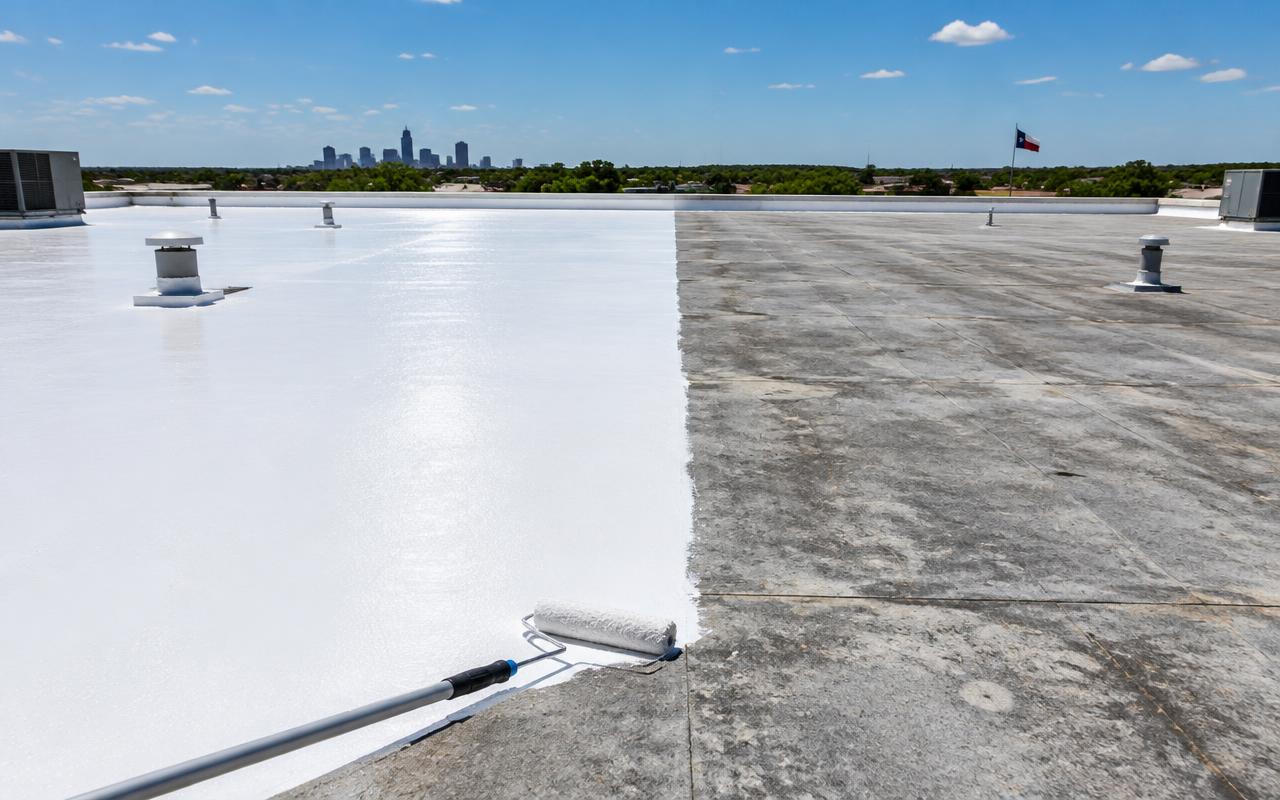
A roof coating is a liquid that is rolled or sprayed onto a flat or low-slope roof and dries into a seamless layer. It can extend a roof's life when the roof is still sound, mostly dry, and drains well. It is not a cure for wet insulation, ponding water, or a worn-out roof. A good contractor tests the roof first and fixes problems before coating.
What this page covers
This page is for owners and facility teams thinking about a coating for a business roof. It explains when coatings fit, when they do not, and what a careful job looks like.
If your roof leaks now, start with our commercial leak repair page. If the roof may be near the end of its life, our commercial roof replacement page explains other options.
What a coating is
A roof coating is a thick liquid. It is put on with rollers, brushes, or sprayers. When it dries, it forms a rubbery layer over the roof.
Common coating types include acrylic, silicone, and urethane. Each one has its own strengths and limits. Some hold up better to standing water. Some resist foot traffic better. Some stick better to certain roof types.
White or light coatings can reflect sunlight. That may help keep the roof cooler in a hot Dallas summer, though results depend on the building.
What a coating can do
- Add a new top layer that sheds water
- Seal small cracks and seams across the roof
- Reflect sun, if it is a light color
- Extend the life of a roof that is still sound
- Avoid the full tear-off of an old roof, in the right cases
In the right case, a coating can be a smart choice. The key is the right case.
What a coating cannot do
A coating does not dry out wet insulation under the roof sheet. It does not fix a roof that holds water in low spots. It does not make a worn-out roof new again.
GAF's liquid-applied roofing manual makes this point plainly. The roof must be prepared well. The surface must be clean and dry. Wet insulation must be removed and replaced. Drainage problems should be fixed before coating.
If these problems are covered up, they can get worse under the coating.
Is your roof a good fit?
A careful contractor checks several things before suggesting a coating.
- How much of the insulation is wet, if any
- Whether water ponds and for how long after rain
- The roof type and how old it is
- The condition of seams, flashing, and edges
- Whether the coating will stick to the roof surface
If a large part of the roof is wet, or if the roof is badly worn, a coating may not be the right choice.
Testing for wet insulation
A moisture survey finds wet areas under the roof sheet. Crews may use moisture meters, infrared cameras, or small test cuts that are sealed right away.
Wet spots must be cut out and replaced with dry insulation before coating. If wet areas are large, the cost of fixing them can change whether a coating still makes sense.
Ask to see the moisture survey results. Ask how much of the roof tested wet.
Adhesion tests
A coating has to stick to the roof. The GAF manual describes adhesion tests, which check how well the coating bonds to the surface.
A crew puts small test patches on the roof, lets them cure, and then pulls on them. If the coating peels off easily, the surface may need more cleaning, a primer, or a different coating.
Ask if the contractor will do adhesion tests. A job without them is a risk.
Drainage first
GAF explains that drains, scuppers, and tapered insulation help move water off a low-slope roof. Tapered insulation is foam board that is thicker on one side, so water rolls toward a drain.
If water ponds for a long time, the contractor may suggest adding drains, adding tapered insulation, or cleaning out drains before coating. Some coatings handle ponding better than others, but no coating is a substitute for good drainage.
Preparing the roof
Good prep is most of the job. A careful crew will:
- Clean the whole roof, often with a power washer
- Let the roof dry fully
- Repair seams, cracks, and blisters
- Fix or replace flashing at walls, curbs, and edges
- Replace wet insulation
- Prime the surface if the maker requires it
Then they apply the coating at the thickness the maker calls for. Too thin, and it may wear out early.
Coatings on different roof types
Coatings can work on many roof types, including metal, mod-bit, built-up, and some single-ply sheets. Each type needs the right prep and the right coating.
On metal roofs, rust spots and loose screws need attention first. Seams may need extra sealing.
On single-ply roofs like TPO, PVC, or EPDM, the coating must be made for that sheet. Carlisle, a large maker, describes these as different materials. A coating that sticks to one may not stick to another.
Warranties for coatings
Coating makers may offer warranties when an approved contractor applies their product. Terms vary a lot. Read them carefully.
Ask what the warranty covers, how long it lasts, and what upkeep is required. Some require regular checks and recoating. Ask whether the warranty covers leaks or only the coating material.
Also ask how a coating affects any warranty already on your roof.
Coatings and storms
A coating does not fix storm damage on its own. Torn or punctured areas must be repaired first. Wet insulation must be replaced.
If your roof was recently in a hail storm, have it checked before coating. Our commercial storm damage page explains how.
What drives the cost
We do not post prices. These things change the cost of a coating job:
- Roof size and shape
- How much wet insulation must be replaced
- How many seams, cracks, and flashings need repair
- The coating type and thickness
- Drainage fixes, if needed
- How hard the roof is to reach
Questions to ask a coating contractor
- Did you do a moisture survey, and what did it show?
- Will you do adhesion tests?
- How will you fix ponding water?
- What coating do you suggest, and why that one for my roof?
- How thick will you apply it?
- What warranty comes with it, and what upkeep does it need?
Coating versus recover versus tear-off
A coating adds a liquid layer on top of the current roof. A recover adds a new roof sheet over the old one, often with new insulation board. A tear-off removes the old roof down to the deck and builds a new one.
Each step costs more and does more. A coating can make sense when the roof is mostly sound and dry. A recover may fit when the top sheet is worn but the deck is sound and the codes allow another layer. A tear-off is often needed when there is a lot of wet insulation or when the roof already has the most layers allowed.
Our commercial roof replacement page explains recover and tear-off in more detail.
Weather during application
Coatings need the right weather to cure, which means to dry and harden. Most cannot go on when rain is close, when dew is heavy, or when the roof is too hot or too cold for the product.
In Dallas, spring storms and summer heat can both affect timing. A careful contractor checks the forecast and the maker's rules. They may start early in the day or wait for a dry stretch.
Ask the contractor what they will do if rain comes before the coating has cured.
Thickness and how it is checked
Makers call for a certain dry thickness. A coating that goes on too thin may wear through early.
Crews can check thickness while the coating is still wet with a small gauge. They can also measure how much product was used over a known area. Some take small samples after it dries.
Ask how they will check thickness and whether you can see the results. A clear record helps if you ever need to use a warranty.
Upkeep after coating
A coated roof still needs care. Clean drains, gutters, and scuppers so water can leave. Keep walk paths clear of sharp debris.
Have the roof checked once or twice a year and after big storms. Look for spots that are worn thin, peeling, or cut. Small spots can often be cleaned and touched up before they grow.
Over time, many coatings can be cleaned and recoated. That can extend the roof's life again, as long as the roof under it stays sound and dry.
Occupied buildings
Coating work is often quieter than a tear-off. There is less noise and debris. Still, some products have strong smells while they cure.
Ask about the product's smell and how the crew will keep fumes away from air intakes. Plan for where ladders and supplies will go, and keep walkways and fire exits clear.
Tell staff and tenants when work will happen. A short notice can prevent many complaints.
Signs a coating is not the right choice
- Large areas of wet insulation
- A roof with many layers already
- Widespread splits, blisters, or loose seams
- A deck that is rusted, rotted, or weak
- Drainage that cannot be fixed
In these cases, a recover or tear-off may give better value. A fair contractor will tell you if a coating is not a good fit, even if they sell coatings.
Ask for a written plan
Before work starts, ask for a written plan. It should list the prep steps, the repairs, the coating, the thickness, and the dates. It should also say what happens if rain comes or if more wet insulation turns up. A clear plan makes it easy to check the work at the end.
Is a coating a good fit?
| What the check finds | What it means for a coating |
|---|---|
| Roof mostly dry and sound | A coating may be a good fit |
| Small wet areas | Replace them first, then coat |
| Large wet areas | Coating may not make sense; compare replacement |
| Water ponds for days | Fix drainage before coating |
| Coating peels in adhesion test | Change prep, primer, or product |
| Roof badly worn or near end of life | Replacement may be better |
Common questions
- Can a coating stop all leaks?
- No. It can seal small cracks and seams. Leaks from flashing, wet insulation, or bad drainage need their own fixes first.
- Can you coat over wet insulation?
- No. The GAF manual says wet insulation must be removed and replaced before coating.
- Will a white coating lower my energy bills?
- It may help keep the roof cooler. Results depend on the building, insulation, and air system.
- How long does a coating last?
- That depends on the coating, its thickness, and upkeep. Ask the maker and contractor what to expect.
- Can any roof be coated?
- No. The roof must be sound, mostly dry, and drain well. The coating must stick to that roof type.
- Can a coating be recoated later?
- Many can, with the right prep. Ask the maker what is needed.
What happens if you send a request here
This site is a preview. The request form is not connected, so nothing you type is saved or sent. No local roofing partner is confirmed yet, so we cannot promise a visit, a price, or a time. If anyone is in danger, call 911. How this site works.
Sources
- GAF — Liquid-applied roofing manual
- GAF — Mitigating water on roofs
- Carlisle SynTec — TPO membranes
- Carlisle SynTec — PVC membranes
- Carlisle SynTec — EPDM membranes
Sources checked October 5, 2026. Confirm current rules before acting.