Guide · Informational preview
Roof Fire Ratings and Assemblies
Class A, B, and C are roof test labels. They describe how a roof handles fire from outside. Class A uses the most severe of those tests. These labels do not mean a roof is fireproof. They also do not state an hourly fire rating for the whole roof and ceiling. The exact roof layers and listed design matter.
Dallas Roofing Authority is an information site. A serving roofer and working request channel have not yet been verified. This page does not book a visit or save a service request.
Two different fire questions
Start with the question the rating answers
When a quote says fire-rated, ask what kind of rating it means. A roof covering faces one set of tests. A roof and ceiling may face another. Wind tests answer another question again. A useful bid names the test and the roof design. It gives you more than a broad claim of safety.
An assembly is a set of roof parts built in a set way. The record may specify the deck, boards, roof sheet, and other parts. The deck is the base that supports the roof. A product may be part of a rated roof. It may not have the same result in all roofs.
This guide helps you ask for the right documents. It does not choose a code path or approve a roof. Have a qualified roof design expert check the building. That expert must also check the rules that apply. If you are changing roof layers, keep that review in the scope from the start.
What Class A, B, and C mean
UL's roof guide names three levels of outside fire tests. Class A uses severe fire tests. Class B uses moderate tests. Class C uses light tests. The tests use standards called UL 790 and ASTM E108. The labels report test results under set rules. Real fires can differ from those tests.[F1]
UL lists tests for how flames spread. It also tests repeated flames and burning objects on the roof. A burning brand is a burning object used in a test. Those checks help assess roof coverings exposed to fire. They do not turn the roof into a shield against all building fire risks.[F2]
Next, ask if the planned roof matches the tested design. Ask for the exact listing and its limits. Have the designer mark the parts that match your roof. Do not rely on the letter A beside a product name. Check the details that make that claim apply.
Keep hourly fire resistance separate
An hourly fire-resistance rating is for a tested set of building parts. UL identifies UL 263 and ASTM E119 as standards used for those ratings. That rating is for the way those parts were built. Class A does not give you an hourly-rated roof and ceiling.[F3]
Ask the designer whether your project needs an hourly rating. If it does, request the design number and the matching assembly. Ask which parts above and below the deck belong to it. This can include details you do not see from the roof surface.
Keep the two questions on their own lines in your bid review. One line is for the roof's outside fire class. The next is for any hourly rating the roof needs. Have the design team fill in the real rules. This step helps you keep unlike claims apart.
Read the full list of required layers
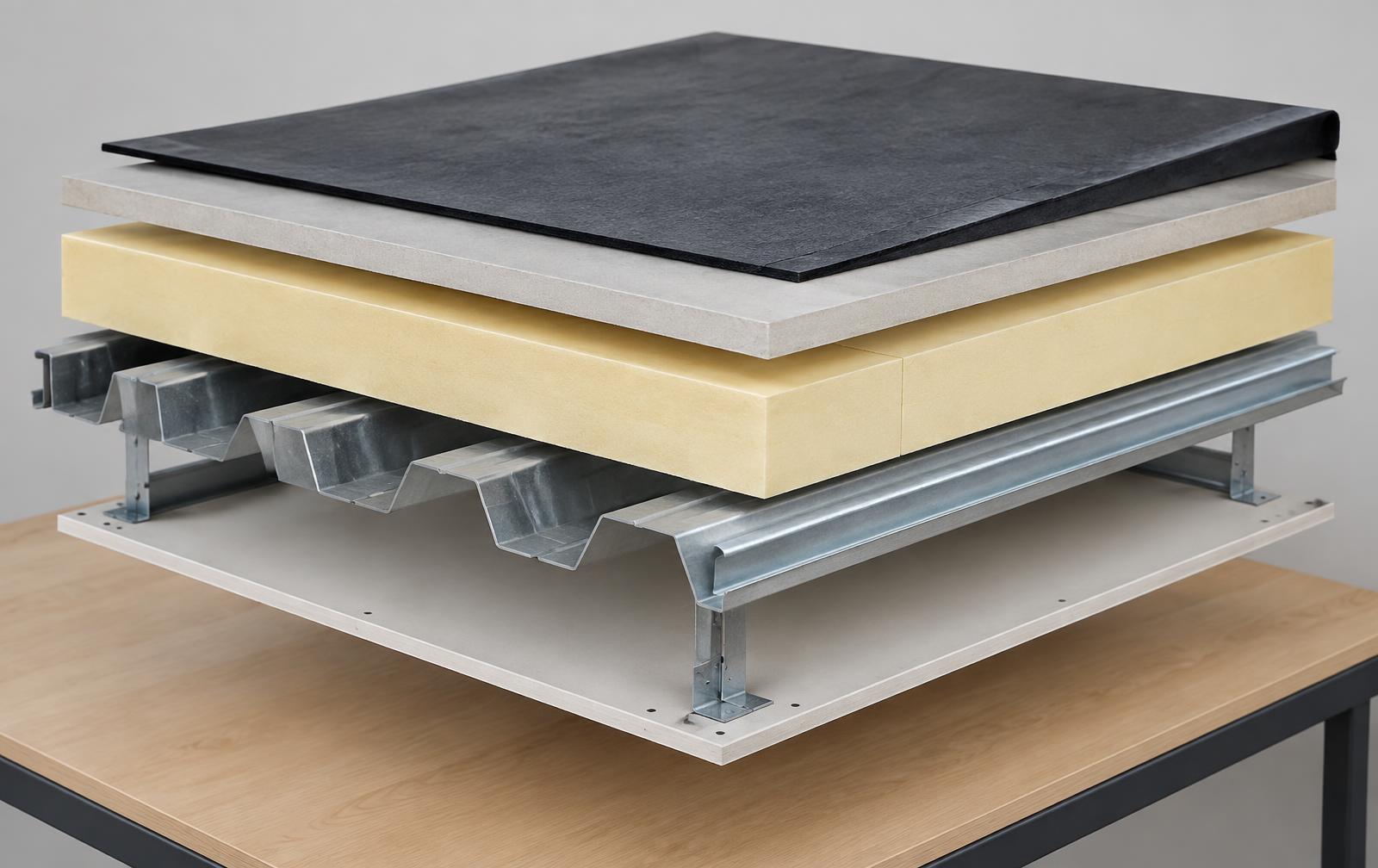
Ask for a drawing that shows the roof from top to bottom. Name the top roof layer and all parts below it. Include boards, foam, deck, and any underlayment. Underlayment is a layer below the outer roof covering. Insulation slows heat flow. Each name should match a real product or the accepted description in the design record.
The listing may set a slope limit or call for added layers. It may allow some choices and rule out others. Have the reviewer name those limits for your roof. A sales sheet cannot replace the full file. UL's older Class A, B, and C guide explains why deck type, slope, and required boards need to be checked.[F1]
Use one dated set of files for bids. Give bidders the same layer list. If the lists differ, the prices may be for unlike jobs. Ask each one to call out any proposed change. This lets you compare cost without losing the rated design that the project needs.
Understand why the deck matters
Some roof designs are listed over decks that can burn. Others are listed over decks that do not burn. Those types have names you may see in a bid. Combustible means it can burn. Noncombustible is a code term for parts that pass a test for not burning. Ask the design team to check which deck you have. It must find a design that fits that deck. Do not guess from the roof's outer surface.
A metal roof surface does not mean the base below is metal. A new roof sheet may cover layers left from earlier work. Ask how the old roof layers were checked. If the records have gaps, ask what field checks you need. Also ask how test holes will be closed.
When a bid uses the word equivalent, ask for its basis. A change in deck, board, or roof base may change the approved choices. Have the design expert review the substitute before work proceeds. The owner should not have to judge such a change from photos alone.
Do not confuse wind records with fire records
UL has roof-deck records for wind uplift. Uplift is the force that pulls a roof up. Some records say fire was not investigated. That means the wind record does not establish the fire result. A roof can need proof for more than one goal.[F4]
Take care with fire notes in wind test records too. UL explains that some refer to UL 1256. It is not the same test as Class A, B, or C. It also differs from an hourly fire test. Ask the design team which test the note refers to.[F4]
Keep a short evidence list with three clear questions. What proves the needed outside-fire class? What proves any hourly fire rating? What proves the wind test result? The same document may answer some questions, but do not assume it answers all three. Ask the reviewer to show the link for each claim.
Check the rules for the real property
Dallas's current code page lists the 2021 International Building Code and related codes with local amendments. Amendments are local changes to the base code. The page also lists an existing-building code, which can matter when work is done on an older building. Confirm the current rules when your project is reviewed.[F5]
A Dallas mail address may not name the office that reviews the work. Give the design team the full site address. Ask it to name the authority with jurisdiction. That is the office that applies the rules to the property. Nearby cities can have their own adopted codes and review process.
Request the needed roof rating in writing before final bids. Have the designer explain how it was chosen for the building and project. This guide does not claim that all Dallas roofs need the same class. Nor does a maker's listing prove that a roof meets all local rules.
Handle reroofing and added layers with care
For work on an old roof, ask which old layers will stay. Recover means adding a roof system over a suitable old one. Tear-off means removing roof layers as part of the work. Both need a design that matches the roof left at the end. For a sheet laid over metal, the metal retrofit guide explains the base checks.
Ask the team how retained layers affect the planned fire listing. Do not assume a new top sheet carries its rating over any base. Have the reviewer mark which old materials are known and which need checks. Keep those open questions on the plan until they are solved.
If old layers must come out, put that scope in the contract. Ask how hidden findings will be documented and priced. A clear process helps you track changes to the roof design. Keep the final layer list current as the job develops.
Review changes before products are swapped
Ask for notice if a listed product is unavailable. Have the bidder name the planned replacement and show the matching design. Do not accept similar as the full explanation. Weight, color, and thickness may look alike. That does not prove the part can be used in that roof.
UL explains that a variation marked not investigated has not been assessed for that stated rating. Treat that wording as a question for the design team. It does not grant approval for the change. Ask what evidence is needed and who must accept it before work continues.[F3]
Keep a written change log. Record the old part, new part, and changed plan. Name who checked it. Add the cost and schedule effect if there is one. This gives the owner and crew one clear file. It can help avoid a mismatch at the final roof check.
Ask for proof that is easy to trace
Ask for the listing number and full roof plan. Add the current product guide. Ask the designer to highlight the selected options. A file may allow more than one version. The crew needs to know which one to build. Keep the exact version used for approval with the project file.
Ask how delivered materials will be checked against that file. Labels, shipment records, and photos help show what was used. Request photos of hidden layers before they are covered. These owner records support a clear handoff, but they do not replace needed inspections or expert review.
At closeout, request the final assembly record and any approved changes. Ask whether permits or inspection records remain open. Keep the documents where future owners or roof professionals can find them. A known roof build-up helps guide future care and changes.
Use the rating without asking it to do too much
A fire rating is one part of a roof decision. It does not tell you if the roof leaks. It does not rate hail damage or tell you how long the roof will last. Ask for separate evidence where those claims matter. The commercial cover board guide and single-ply attachment guide explain two parts of that larger decision.
Keep roof work tied to the whole site's fire-safety plan. Roof labels do not replace alarms, safe work practices, or the rules for building use. If a planned equipment change alters the roof, ask the design team what needs review. Do this before a new opening or support is built.
If someone promises a fireproof roof, ask them to replace that claim with the exact tested rating. Request the listing, assembly, and limits. A provider who can explain those details gives you something concrete to compare. Broad reassurance gives you little to verify.
Prepare a focused design request
Gather the site address, roof plans, known deck type, and planned scope. Note whether the work changes the roof alone or includes ceilings and equipment. Add earlier permit records if you have them. Label missing facts rather than fill them in from memory.
Ask the design expert to name the needed fire ratings and matching assemblies. Ask the expert to explain each test in plain words. Keep outside-fire class, hourly ratings, and wind tests distinct. Use that explanation with every bid. It gives each bidder the same goal. It helps you spot missing parts of a bid.
Common questions
- Does Class A mean the roof cannot burn?
- No. It describes performance under a defined outside-fire test. It is not a fireproof claim. Ask which assembly was tested and whether your planned roof matches its details and limits.
- Is a Class A roof the same as a one-hour roof?
- No. They describe different tests and performance. Ask whether the project requires one or both. Have the design expert give you proof for each rating. Do not turn one label into the other.
- Can I use a board's fire label as proof for the whole roof?
- A board may be one required part of an assembly. Ask for the complete roof record that includes it. Confirm the other layers, deck, and use limits. A single product label should not stand in for that review.
- What if I cannot find the old roof's records?
- Tell the designer which records are missing. Ask how the construction can be checked and what uncertainty remains. Do not claim a rating just from how the roof looks.
- Is the older UL explainer still useful?
- It helps explain the basic Class A, B, and C terms. It is dated guidance, not a current Dallas code decision. Use current listings, project instructions, and local review for the real roof. Keep the source date visible when sharing that older guide.
Next step
Gather the roof scope and known deck details. Ask the design professional to list the needed outside-fire, hourly, and wind evidence on separate lines.
Request the matching fire records(opens official site in a new tab)Sources
- [F1] UL: Class A, B, and C Roof Ratings (2014 article, 2015 reprint)Limit: Older explanatory source only. Does not establish present Dallas requirements.
- [F2] UL: Roofing Testing and Certification ServicesLimit: Testing-service description is not approval for a specific building.
- [F3] UL: Explaining Guide Information for Fire-resistance Ratings TerminologyLimit: 2022 definitions; actual current design listing still required.
- [F4] UL: Certifying Roof Deck Constructions for Wind ResistanceLimit: 2019 page reprints older material; used for distinctions, not current project code selection.
- [F5] City of Dallas: Current City Codes and OrdinancesLimit: Date-specific directory, not a project compliance review. Recheck at permit/design time.
Sources checked October 5, 2026. Confirm current rules with the city before work starts.